Morocco-DRC: Rabat and Kinshasa Cement a Strategic Partnership for a More Sovereign and Stable Africa
ALDAR /
The strategic partnership between Morocco and the Democratic Republic of the Congo continues to gain momentum, underpinned by strong political trust, shared principles and a growing convergence on the major challenges facing Africa and the international community.
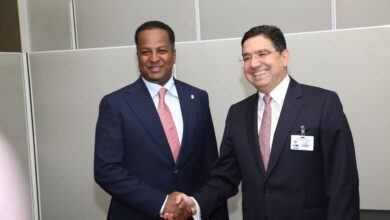
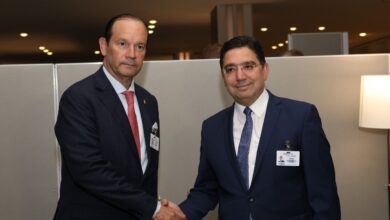
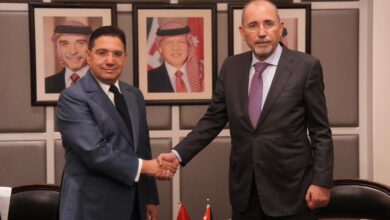
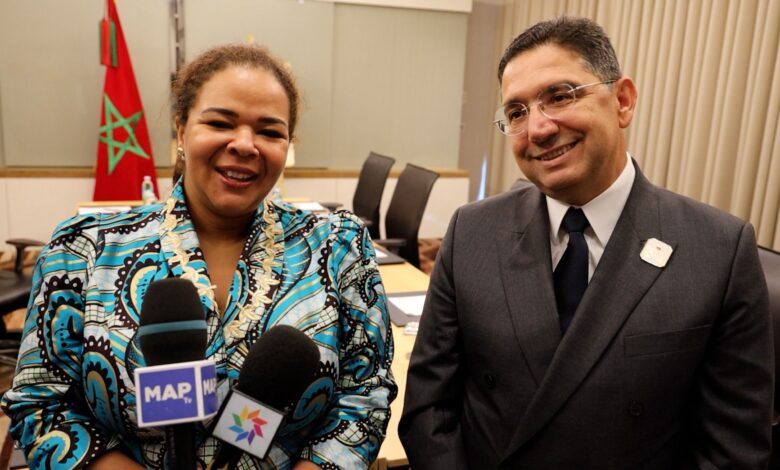
The latest talks held Saturday in Luanda between DRC Foreign Minister Thérèse Kayikwamba Wagner and Morocco’s Minister of Foreign Affairs, African Cooperation and Moroccan Expatriates, Nasser Bourita, provided fresh evidence of the depth and resilience of the ties between Rabat and Kinshasa.
Held on the sidelines of the 26th Extraordinary Session of the Executive Council of the African Union, the meeting highlighted a shared commitment to promoting a more peaceful, inclusive, just and prosperous world, while strengthening Africa’s capacity to address its own challenges and defend its interests.
A Partnership Built on Shared Principles
Speaking after the meeting, Thérèse Kayikwamba Wagner stressed that the DRC and Morocco share a steadfast commitment, at both the regional and international levels, to building “a more peaceful, more inclusive, more just, but also more prosperous world.”
The Congolese foreign minister welcomed the strength of bilateral relations, emphasizing that Moroccan-Congolese friendship rests on “common and shared principles and values.”
She also underscored the two countries’ attachment to territorial unity and integrity, as well as to the principles of independence and national sovereignty.
Against this backdrop, Ms. Wagner reaffirmed Kinshasa’s determination to continue working to further consolidate “the exemplary relations that have united the two countries for decades.”
She also praised the “convergence and highly constructive nature” of her discussions with Nasser Bourita, describing this dynamic as an important driver for broadening and deepening bilateral cooperation.
The talks reviewed the various existing cooperation frameworks between Morocco and the DRC and explored avenues for further strengthening the partnership. They also focused on their shared commitment to peace, stability, justice and development at both the regional and international levels.
Morocco Reaffirms Unwavering Support for the DRC’s Sovereignty
For his part, Nasser Bourita described relations between Morocco and the Democratic Republic of the Congo as “strong, solid and deeply rooted in history.”
The Moroccan foreign minister recalled that the Kingdom has consistently stood alongside the DRC since its independence, highlighting the longstanding bonds of solidarity, mutual support and respect for state sovereignty that underpin the bilateral relationship.
Bourita reaffirmed Morocco’s “constant and unconditional” support for the sovereignty and national unity of the Democratic Republic of the Congo, as well as for the measures undertaken by Kinshasa to defend its sovereignty against external interference.
“Sovereignty, territorial integrity and non-interference in the internal affairs of states constitute the foundations of peace and stability in Africa,” the Moroccan minister stressed.
The statement reflects a core principle of Morocco’s diplomatic approach, which places respect for national sovereignty and territorial integrity at the center of efforts to build lasting stability across the continent.
At a time when Africa continues to face a complex landscape of conflicts, crises and external interference, Rabat’s position underscores its emphasis on African states’ right to safeguard their sovereignty and territorial integrity.
Rabat and Kinshasa Strengthen Their Multilateral Coordination
The Luanda talks also addressed a number of regional and multilateral issues, particularly in light of the Democratic Republic of the Congo’s election as a non-permanent member of the United Nations Security Council.
Morocco views the DRC as “a worthy representative of the African continent, carrying Africa’s voice and defending its interests” within this key international body.
The convergence between Rabat and Kinshasa therefore extends beyond their bilateral relationship, reflecting a shared determination to strengthen coordination on issues of common interest and contribute more effectively to African efforts to promote peace, security, stability and development.
The partnership is consequently taking on an increasingly strategic dimension, with both countries seeking to amplify their respective contributions to continental and multilateral diplomacy.
The Moroccan-Congolese Joint Commission: A New Milestone Ahead
The two countries are also preparing to give their economic and institutional cooperation a fresh boost.
Nasser Bourita announced that the Moroccan-Congolese Joint Commission will soon convene in Kinshasa, marking an important upcoming milestone in the development of bilateral relations.
The meeting is expected to inject new momentum into the various areas of cooperation while opening additional avenues for partnership across political, economic and development-related fields.
From Luanda to Kinshasa, the latest diplomatic exchanges confirm that Morocco-DRC relations are entering a new phase, characterized by strengthened political confidence, strategic convergence and a shared commitment to Africa’s stability and sovereignty.
The growing partnership between Rabat and Kinshasa reflects a broader ambition: to contribute to an Africa that is more stable, more sovereign and better equipped to defend its interests and strengthen its voice on the international stage.