$348 billion in 2025.. Artificial intelligence strengthens economic cooperation between China and Africa
ALDAR /
In recent years, artificial intelligence has emerged as a new driver of economic and trade cooperation between China and African countries, amid the expanding use of AI and growing reliance on digital solutions across a number of key sectors, according to the findings of a recent report.
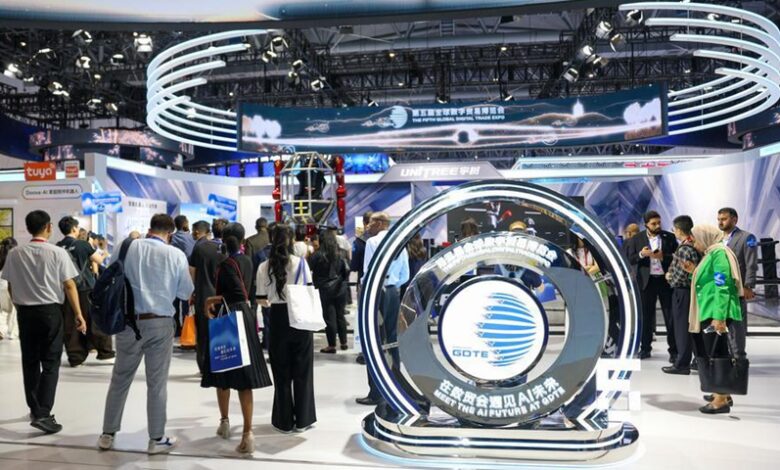
Titled “China-Africa Economic and Trade Cooperation: Progress and Outlook 2026,” the report was presented during an event held to mark “African Digital Trade Day,” on the sidelines of the fifth Global Digital Trade Expo in Hangzhou, the capital of Zhejiang Province in eastern China.
The report noted that artificial intelligence is no longer merely associated with future developments, but has become an area of practical cooperation between China and Africa, with its applications expanding in fields including disaster prevention, healthcare, smart agriculture, as well as urban management and governance.
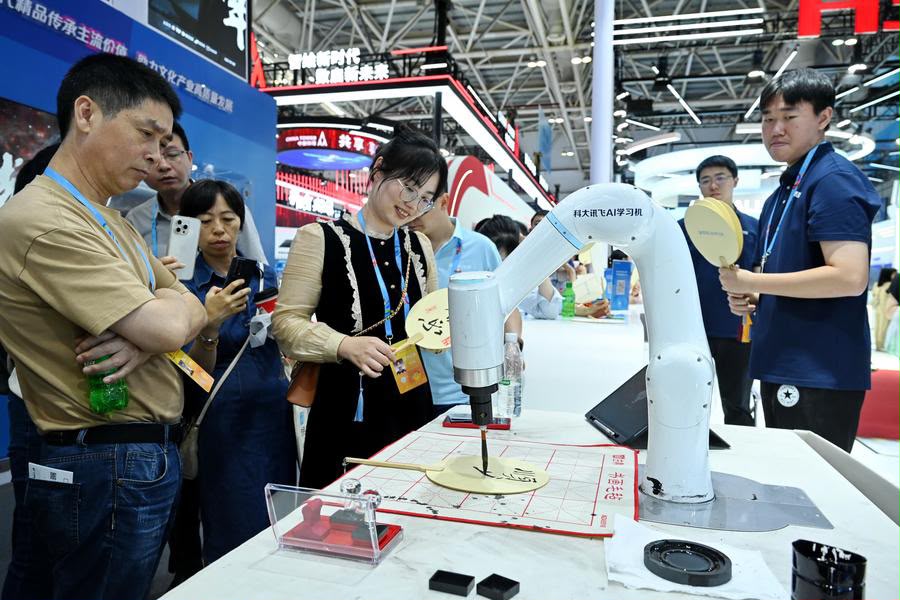
In this context, the “MAZU” meteorological early-warning system is being promoted as an AI-powered solution designed to meet the needs of African countries in forecasting weather-related disasters and reducing associated risks. The system has already been deployed in Ethiopia and Djibouti, with services tailored to local specificities and needs.
This digital momentum comes as trade between China and Africa continues to grow. In 2025, the value of bilateral trade reached around $348 billion, marking a 17.7% increase compared with the previous year.
As another step to boost trade, China began implementing measures on May 1 to exempt imports from 53 African countries that maintain diplomatic relations with Beijing from customs duties.
China’s digital services trade has also recorded significant growth, averaging 11.2% annually between 2016 and 2025, which is 1.8 percentage points higher than the global average.

These developments coincide with the fifth Global Digital Trade Expo, held in Hangzhou from September 23 to 27, with broad participation from economic stakeholders from around the world.
Meanwhile, this year’s edition saw the announcement of the establishment of the Arab Union for Digital Economy in Hangzhou, alongside the unveiling of seven major achievements within the framework of China-Arab digital cooperation. Several projects were also signed in areas including robotics, industrial funds, smart manufacturing, food trade and skills development, with a total value of $255 million.