From Luanda, Bourita Calls for a Preventive Approach to Conflicts and Stronger Link Between Peace, Security and Development
ALDAR /
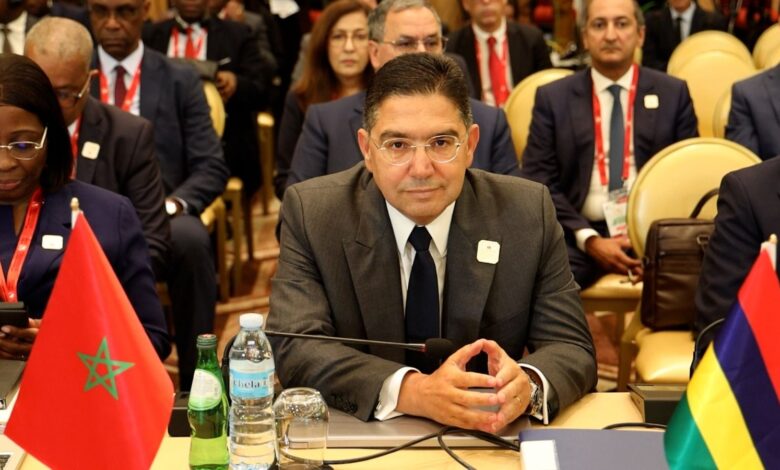
Morocco’s Minister of Foreign Affairs, African Cooperation and Moroccans Abroad, Nasser Bourita, on Saturday called for prevention to be placed at the heart of Africa’s peace and security agenda, urging greater efforts to address the root causes of conflicts and strengthen the link between peace, security and development.
Speaking at the 26th Extraordinary Session of the Executive Council of the African Union (AU), dedicated to strengthening the African Peace and Security Architecture and mechanisms for conflict prevention and resolution, Bourita stressed the need for a proactive approach capable of anticipating crises rather than responding only after conflicts have erupted.
Addressing the Root Causes of Conflicts
Bourita called for “addressing the root causes of conflicts by placing the interdependence between peace, security and development at the heart of the continent’s preventive action.”
He stressed that achieving lasting peace in Africa requires greater investment in the factors and mechanisms that promote stability, while strengthening the resilience of African states and societies in the face of crises.
According to the minister, this approach requires moving beyond a logic focused primarily on managing conflicts once they have broken out, toward a genuine culture of prevention based on anticipating crises and addressing their political, economic, social and development-related causes.
Morocco Reaffirms Full Support for the Luanda Process
In this context, Bourita reaffirmed Morocco’s full support for the orientations and objectives of the Luanda extraordinary session, which seeks to strengthen and operationalize the African Peace and Security Architecture and consolidate more effective mechanisms for conflict prevention and resolution.
The Moroccan minister also stressed the importance of strengthening coordination and cooperation between the African Union and the United Nations in implementing the Luanda Action Plan.
Such coordination, he noted, should remain a guiding principle of collective action in order to enhance the effectiveness of efforts aimed at preserving peace and security across the continent.
Peace and Security Financing in Line with AU Procedures
On the financial front, Bourita said Morocco was renewing, through its participation in the extraordinary session, its commitment to and support for the ambition embodied in the Luanda Action Plan and its implementation matrix.
He stressed that financing mechanisms for African action in the field of peace and security should comply with the African Union’s budgetary procedures and rules.
The objective, he said, is to ensure consistency between continental financing mechanisms for peace and security initiatives and the institutional and budgetary frameworks established within the pan-African organization.
Extraordinary Session Focused on Strengthening Africa’s Peace and Security Architecture
The 26th Extraordinary Session of the African Union Executive Council is being held under the theme “Strengthening and Operationalizing the African Peace and Security Architecture,” with the aim of contributing to the establishment of an “Africa at peace and secure.”
The meeting follows a decision adopted at the 39th Ordinary Session of the Assembly of Heads of State and Government of the African Union, held in February 2026.
African leaders had called for a summit in Luanda devoted to strengthening mechanisms for conflict prevention and resolution in Africa, as well as mechanisms for their financing.
The initiative forms part of broader efforts to enhance the African Union’s capacity to provide an early response to crises and strengthen instruments for collective African action in the field of peace and security.
Luanda Action Plan Set for Adoption
At the conclusion of the extraordinary session, participants are expected to adopt a decision, along with the Luanda Action Plan and its implementation matrix.
These instruments are expected to provide an operational framework for strengthening conflict prevention and resolution mechanisms at the continental level, as well as mechanisms for their financing.
The outcomes of the Luanda meeting are therefore expected to represent a further step toward strengthening Africa’s peace and security architecture by placing prevention and the addressing of root causes at the center of continental action, while reinforcing the link between peace, security and development.
They are also expected to contribute to stronger coordination between the African Union and the United Nations, with the broader objective of promoting lasting peace and stability across Africa.