Before the UN General Assembly, Mr. Bourita highlights Africa’s vast potential and opportunities
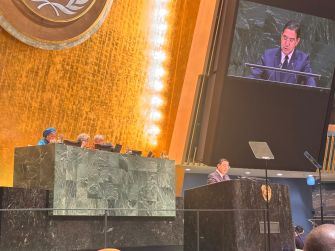
This vision draws on the High Directives of His Majesty King Mohammed VI, which the Sovereign has aptly summed up in the phrase “Africa must trust Africa,” Bourita said in an address on behalf of Morocco during the general debate of the 81st session of the UN General Assembly.
The minister noted that despite its human, natural, and cultural assets, the African continent continues to face a glaring gap between the scale of commitments made by the international community in support of Africa and what is actually being implemented on the ground.
“Morocco’s diplomatic doctrine is rooted in the deep conviction that the African continent has reached an advanced level of maturity that enables it to play a major role in shaping decisions concerning its own affairs and to act as a genuine partner in finding solutions to the major challenges facing all of humanity,” said Bourita, who is leading the Moroccan delegation to this session of the General Assembly.
In this regard, he reiterated Morocco’s longstanding position on the need for comprehensive reform of the United Nations, including the Security Council, to ensure that the Organization’s bodies and institutions reflect today’s geopolitical realities, put an end to the historical injustice faced by the African continent, give Africa the place it deserves, and enable it to make its voice heard in international decision-making.
The minister also stressed that Morocco has not confined itself to theoretical statements but has put this vision into practice through concrete Royal initiatives aimed at strengthening continental integration. Chief among these are the Royal Initiative to provide Sahel countries with access to the Atlantic Ocean, the Atlantic African States Initiative, and the Atlantic Africa Gas Pipeline project.
This commitment to the continent, he added, has also been reflected in major investments in regional infrastructure, exemplary cooperation in food security and fertilizer production, renewable energy projects, water-resource management and health, as well as the training and development of African talent—a critical lever for building a shared and prosperous future.