Bouchiba: Ibn Battuta, an ambassador of Moroccan civilization, and Confucius, an intellectual icon of East Asia
ALDAR/
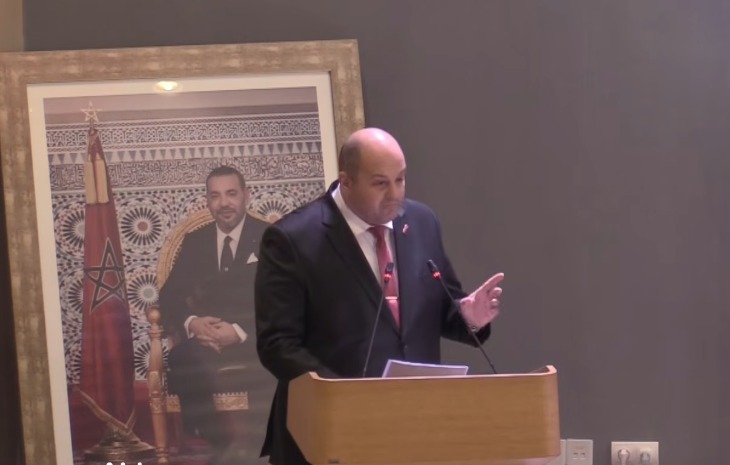
Continuing his analysis of the points of convergence between the two experiences, Nasser Bouchiba highlighted the civilizational and human dimensions of the influence of Ibn Battuta and Confucius, arguing that both transcended the borders of their countries of origin and left their mark on different societies and cultures. He made these remarks during his address at a seminar hosted by the Confucius Institute of Mohammed V University in Rabat on Thursday, November 5, 2026, under the theme: “Dialogue between Moroccan and Chinese Civilizations: Ibn Battuta and Wang Dayuan, Two Stars of the Silk Road and Messengers of Civilization.”
Bouchiba, a specialist in Chinese studies and a member of the World Confucian Association, explained that Confucius’s influence was not confined to China or to his role as a teacher and philosopher. His thought went on to become a major civilizational and intellectual reference in several East Asian countries, including Korea and Japan. In this regard, Bouchiba noted that the World Confucian Association, of which he is a member, brings together prominent figures from different nationalities, including Chinese and Japanese personalities, reflecting the international reach of Confucian thought.
By contrast, the speaker described Ibn Battuta as an unofficial cultural ambassador for Morocco, given his role in introducing Moroccan culture, documenting the societies and civilizations he visited, and building bridges of knowledge between them. He said this role could be carried forward today by Moroccan students pursuing their studies in China, through their efforts to showcase their culture and civilization and strengthen mutual understanding between the two peoples.
He added that the common thread linking the two figures lies in their contribution to fostering mutual understanding among peoples: Confucius through his ethical philosophy, and Ibn Battuta through his firsthand experiences and observations of the civilizations he encountered during his travels.
Another point of convergence highlighted by Bouchiba was their ability to transcend traditional cultural and social affiliations. He explained that Confucius redefined the concept of “Junzi,” referring to a noble or virtuous person, by linking moral standing to competence and conduct rather than lineage or family background. Confucius also advocated access to education for all, without discrimination based on social background.
In the same context, Bouchiba described Ibn Battuta’s journey as an example of intellectual mobility. He began as a young Moroccan setting out in search of knowledge and discovery, without a particularly distinguished academic background or a specific profession, and went on to become a figure of worldwide renown, thanks to the knowledge and experience he gained through travel and encounters with diverse cultures and societies.
Bouchiba concluded that the comparison between Ibn Battuta and Confucius does not imply that one directly influenced the other. Rather, it reveals a form of harmony between two models of knowledge, both of which place experience at the heart of understanding human beings and society and emphasize the importance of openness to others.
He stressed that revisiting the legacy of these two figures is particularly relevant amid the identity crises and tensions between civilizations shaping the world today. Their respective experiences, he said, offer a basis for reflecting on a model of human relations built on learning, interaction, respect and the search for common ground among peoples.