Bouchiba: Ibn Battuta’s Legacy and Confucius’s Thought Strengthen Morocco-China Cooperation
ALDAR/
As part of efforts to strengthen cultural and intellectual cooperation between Morocco and China, the Confucius Institute in Rabat organized a scientific symposium entitled “An Intercivilizational Dialogue Between Ibn Battuta and Wang Dayuan: Two Stars of the Silk Road – Messengers of Civilization.” The event brought together researchers and participants interested in history, intellectual thought, and the civilizational ties between the two countries.
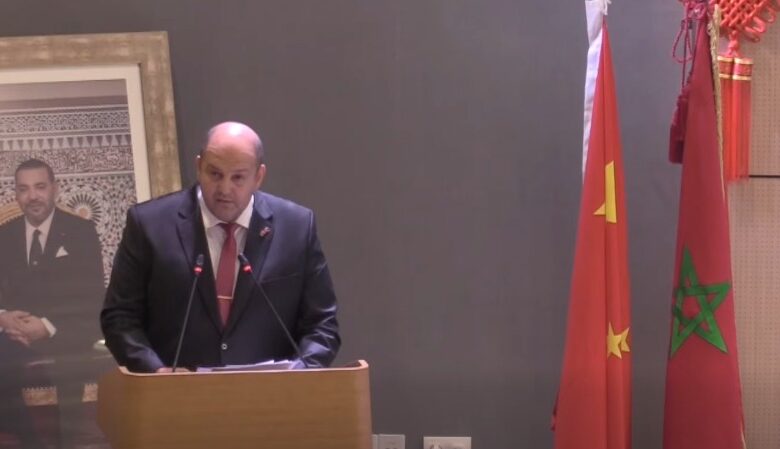
During his contribution to the event, Nasser Bouchiba, President of the China-Africa Cooperation Association and a professor of political science in China, presented an analysis highlighting the place of Moroccan explorer Ibn Battuta in intellectual and human heritage. He described him as one of the most prominent figures embodying Morocco’s openness to the world, through journeys that went beyond geographical exploration to document the systems of governance, traditions, and cultures he encountered in different countries.
Bouchiba emphasized that Ibn Battuta left behind a rich body of knowledge in travel literature, representing a distinctive Moroccan contribution to the development of human thought. He noted that this legacy forms part of a broader civilizational and intellectual heritage shaped by prominent Moroccan figures who left their mark on philosophy, medicine, literature, and Sufism, including Averroes, Ibn Tufayl, Ibn Bajjah, and Ibn Arabi, whose contributions stand as significant milestones in the history of human knowledge.
From this perspective, Bouchiba proposed building an intellectual bridge between Ibn Battuta’s firsthand experiences and the ethical philosophy of the Chinese sage Confucius, who lived more than fourteen centuries before the Moroccan traveler. He argued that bringing these two figures into dialogue offers an intellectual framework for exploring shared civilizational values and opening new avenues of communication between Moroccan and Chinese cultures.
He explained that his approach to the subject is based on two main themes. The first examines how Confucian thought has been received in the Arab and Islamic world, while the second explores the similarities and differences between certain Confucian principles and Ibn Battuta’s approach to travel and documenting his journeys, while taking into account the distinct characteristics of the two civilizational contexts and the intellectual contributions of each figure.
According to the perspective presented by Bouchiba, the importance of this approach lies in moving beyond traditional historical readings of major civilizational figures and making use of their intellectual heritage to build bridges of understanding and interaction between cultures. This would help deepen Moroccan-Chinese dialogue and give it a broader dimension that goes beyond traditional bilateral relations to encompass knowledge, values, and civilizational exchange.