Ministerial Conference on Peacekeeping in Francophone Environment Praises Morocco’s Leading Role in International Peace, Security
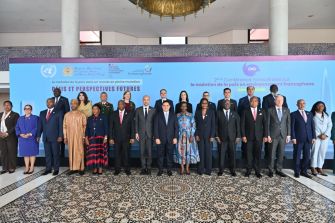
The Conference also praised Morocco’s efforts in mediation, preventive diplomacy, and the promotion of dialogue for the peaceful settlement of disputes.
In the same Declaration, the participating ministers, taking into account the current context facing United Nations peacekeeping operations, expressed concern over the increasing use by non-state actors and armed groups of tools and weaponry targeting the theaters where these operations are deployed.
On this occasion, they reaffirmed that the safety and security of peacekeeping operations remain an absolute priority, while condemning in the strongest terms such attacks, which may constitute war crimes.
They also recalled the imperative of guaranteeing freedom of movement for peacekeepers and removing any obstacles to the implementation of their mandate.
Through the Rabat Declaration, the participating delegations expressed their readiness to work toward clear and realistic peacekeeping mandates, particularly by prioritizing crisis-exit strategies, the primacy of political solutions, and adaptation to the evolving nature of conflicts, thereby contributing to the establishment of lasting peace and stability.
The participating ministers stressed the importance of respecting and implementing the decisions and resolutions of the United Nations relating to peacekeeping.
In this spirit, they indicated that they would continue supporting multilateral efforts aimed at promoting international cooperation and enhancing the effectiveness of peacekeeping operations on the ground.
They also agreed to continue this process of strategic reflection on the future of peacekeeping operations in francophone environments, in support of effective multilateralism at the core of the United Nations mandate.
The Rabat Declaration also welcomed the essential role played by countries contributing to peacekeeping operations, in recognition of their commitment to international peace and security, as well as their contribution to the development of a doctrine dedicated to peacekeeping.
The ministers attached particular importance to training, considered an essential prerequisite for deployment, both initial and during missions. Describing training as the foundation upon which the safety, performance, and effectiveness of any peacekeeping operation rest, they encouraged efforts to strengthen the interoperability of training cycles so as to enable peacekeepers to operate according to common standards.
In this regard, they planned to promote mechanisms for strengthening the capacities of peacekeeping operations, particularly those deployed in complex environments, as well as to mobilize existing francophone networks in order to establish a pool of mediation experts who could be deployed within peacekeeping operations in francophone settings.
Finally, the participating ministerial delegations agreed to strengthen multilingualism within United Nations peacekeeping operations in order to address the scourge of disinformation and hate speech, which compromise the safety and security of peacekeepers deployed in the field.
Based on these concrete actions, the ministers expressed their commitment to integrating these fundamental principles into their countries’ contributions to upcoming discussions on the review of the peacekeeping architecture, including its linkage with peacebuilding, while taking into account the conclusions of the Second Ministerial Conference on Peacekeeping in Francophone Environments.
The delegations thus agreed to continue collective action and consultation within the UN, the Organisation internationale de la Francophonie (OIF), and the relevant international bodies in order to strengthen the effectiveness of peacekeeping, while favoring a political and operational approach grounded in realism and pragmatism.