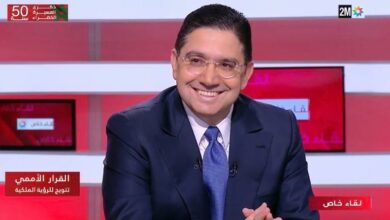
FOREIGN MINISTER CALLS FOR PEACEKEEPING MANDATES IN STEP WITH DEVELOPMENTS ON THE GROUND
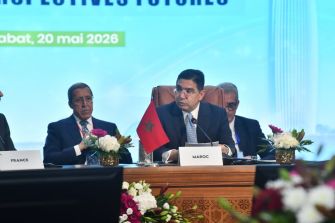
Speaking at the opening of the 2nd Ministerial Conference on Peacekeeping in the Francophone Environment, MFA Bourita recalled that hosting this Conference in Morocco bears witness to the Kingdom’s deep commitment to the values of peace, cooperation, and international solidarity, in line with the Very High Guidelines of His Majesty King Mohammed VI, may God assist Him.
In this spirit, MFA Bourita stressed that peacekeeping operations must be based on realistic, achievable, and prioritized mandates backed by clearly defined and regularly reassessed political strategies. He noted that it is better to pursue less ambitious but effectively achieved objectives than to maintain unrealistic and unfulfilled promises.
The minister pointed out that this conference comes at a strategic time for peacekeeping, in a context marked by persistent political divisions within the Security Council, the evolving nature of conflicts, and increasing pressure on available resources.
He also warned of a theater of operations that has become increasingly hostile, marked by asymmetric threats and attacks by non-state armed groups and separatist movements, with proven links to terrorist organizations, targeting Blue Helmets. He called for a zero-tolerance policy regarding crimes committed against peacekeeping personnel.
Faced with these challenges, MFA Bourita considered that the debate should not pit maintaining the existing system against abandoning it. Instead, it should focus on the necessary reform of this essential instrument of multilateralism to make it more flexible, more effective, and better adapted to the realities on the ground.
He also insisted that peacekeeping operations must remain temporary instruments in the service of a lasting political solution, rather than acting as a substitute for the political will of the parties involved. From this perspective, the closure of a mission must be viewed as a plausible scenario when the evolution of the political process and conditions on the ground permit it.
MFA Bourita highlighted Morocco’s unique experience in peacekeeping, recalling the Kingdom’s uninterrupted participation since 1960, the deployment of more than 100,000 Moroccan peacekeepers to date, as well as the current presence of nearly 1,340 Moroccan military personnel, primarily within MINUSCA in the Central African Republic and MONUSCO in the Democratic Republic of the Congo.
This contribution, he indicated, grants Morocco a particular legitimacy to take part in debates on the reform of peacekeeping operations, advocating for a more effective and safer approach that is more rooted in the needs of local populations.
In addition, the minister called on the Francophone community to transform its operational weight into genuine political and doctrinal influence. He noted that the Francophone space hosts almost two-thirds of ongoing peacekeeping missions and mobilizes nearly 60% of the UN budget dedicated to this sector, while its personnel contribution remains below its potential.
In this perspective, MFA Bourita called for the development of a common Francophone vision for peacekeeping and peacebuilding, the strengthening of Francophone human capacities, the consolidation of the training architecture, and the promotion of interoperability among Francophone contingents.
Finally, he reaffirmed Morocco’s readiness to contribute to this collective effort, notably through its Center of Excellence for Peacekeeping Training in Benslimane, while calling for the institutionalization of the Ministerial Conference on Peacekeeping in the Francophone Environment as a political framework for guidance and momentum on an annual or biennial basis.