Elmahjoub Dasaa Calls for the Establishment of a Euro-Mediterranean Media Network to Promote Religious and Cultural Diversity
Aldar
Moroccan journalist and researcher Elmahjoub Dasaa, a Fellow of the King Abdullah bin Abdulaziz International Centre for Interreligious and Intercultural Dialogue (KAICIID), has called for the establishment of a Euro-Mediterranean media network to help promote religious diversity across the Euro-Mediterranean region.
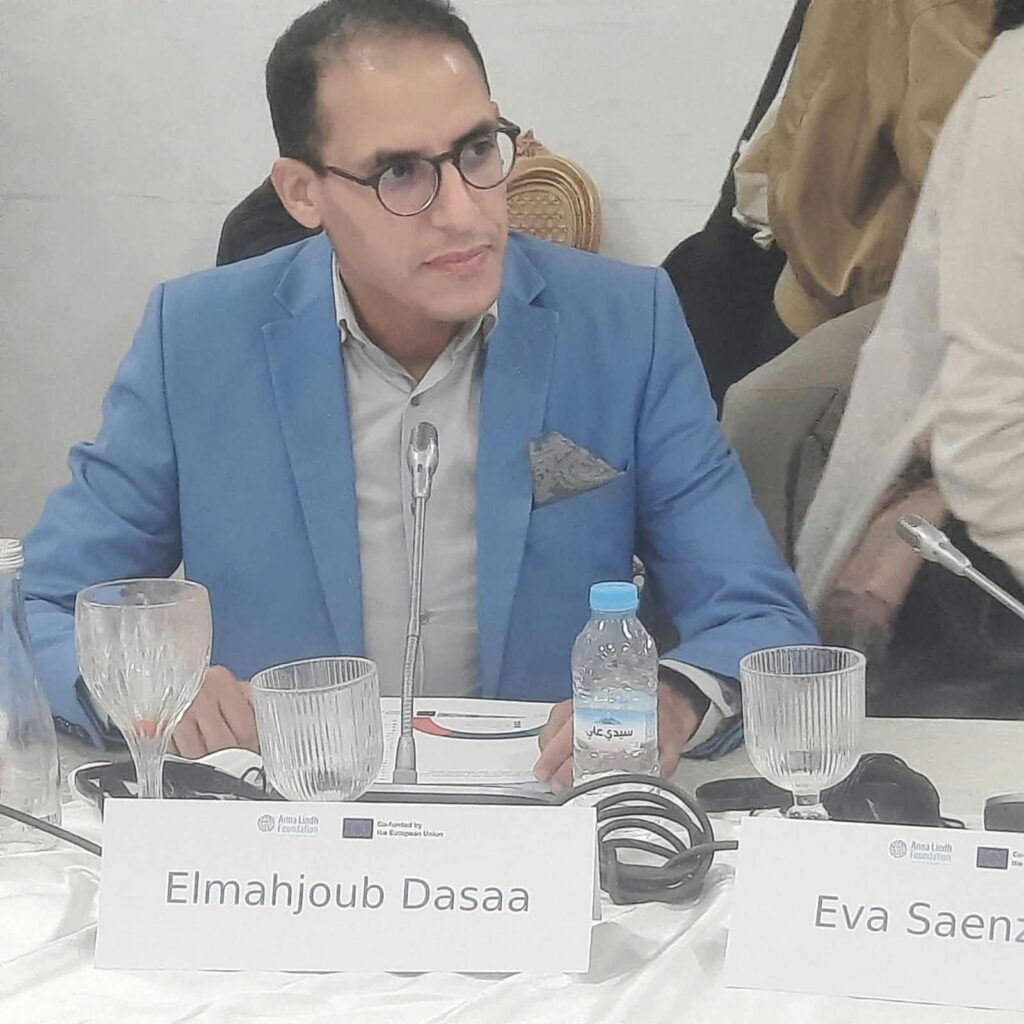
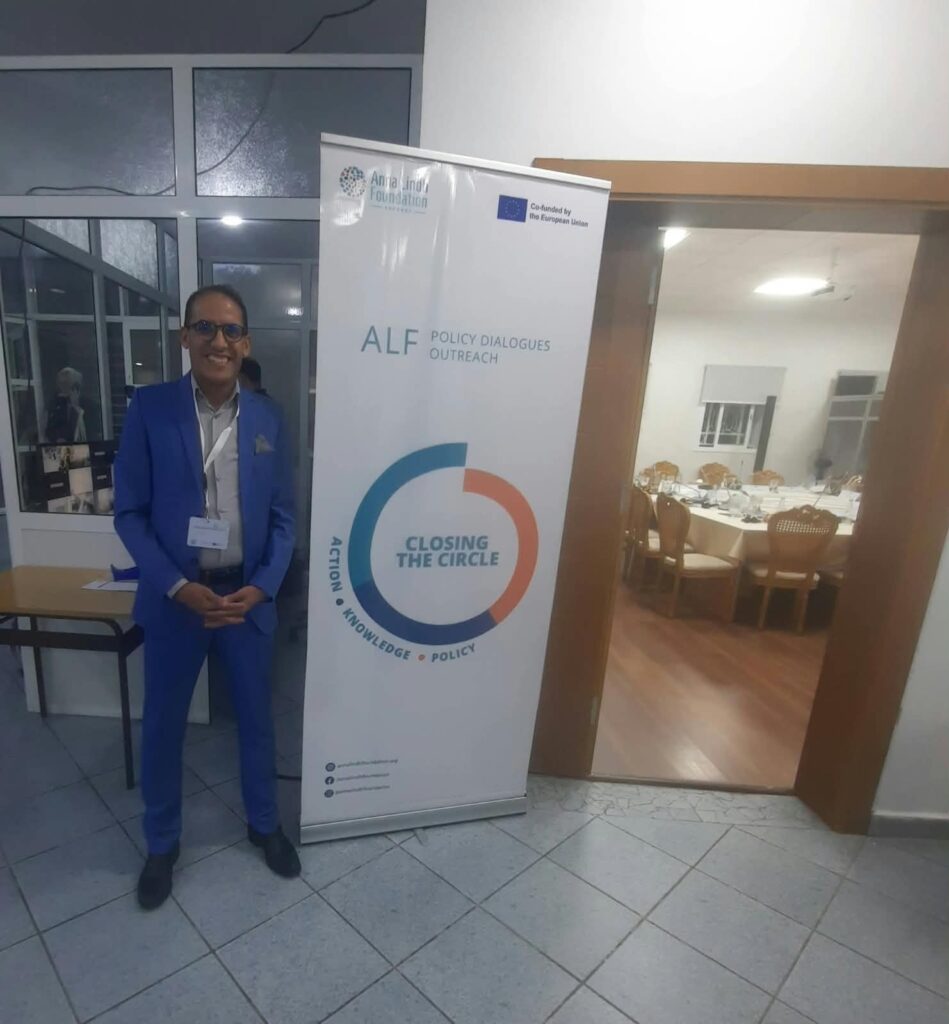
Speaking last Wednesday in Tetouan during a high-level Policy Debate entitled “The Role of Religious Pluralism in Times of Multi-Dimensional Crises: Advancing Living Together in the Euro-Med,” Dasaa, an alumnus of the Dialogue Journalism Fellowship, stressed that media which embraces religious diversity has become a professional and societal necessity, rather than merely an editorial choice within media organisations.
In this context, he pointed out that, in a world increasingly marked by crises and conflicts, where political, religious, cultural and identity-related factors intersect, the media can no longer be viewed simply as a transmitter of events. It has become an influential actor in shaping perceptions and attitudes, capable of either deepening divisions or building bridges of communication and mutual understanding.
A graduate of the Higher Institute of Journalism and Communication in Rabat and a member of the Global Internet Forum to Counter Terrorism, Dasaa noted that dialogue journalism represents a form of responsible journalistic practice that gives space to diverse voices, presents differences within their proper contexts, and challenges stereotypes and hate speech.
He added that the social responsibility of the media requires more than simply covering initiatives promoting dialogue and coexistence. It also entails giving such initiatives the visibility they deserve and highlighting experiences in which dialogue between religions and cultures is translated into practical cooperation that benefits communities.
The KAICIID Fellow argued that media responsibility is becoming increasingly important in light of the current digital revolution. The challenge is no longer limited to confronting misinformation, hate speech and extremism; it also involves producing credible alternative media content that strengthens trust, mutual understanding and peaceful coexistence.
Elmahjoub Dasaa emphasised the need to move beyond dialogue as an end in itself and recognise it as a gateway to joint action and collective responsibility. This requires launching practical initiatives that bring together religious and civil society actors around shared humanitarian and societal concerns, including promoting citizenship education and combating digital disinformation and hate speech.
He further explained that when dialogue becomes an everyday practice rooted in local communities, it becomes more capable of withstanding crises and making a meaningful contribution to peacebuilding and the consolidation of coexistence across the Euro-Mediterranean region.
Dasaa also stressed that, more than ever, all stakeholders are called upon to develop narratives that recognise religious and cultural diversity as a valuable source of enrichment rather than a threat to identity. This requires moving beyond discourse that merely emphasises differences towards narratives that highlight shared values, including human dignity, justice, solidarity and the rejection of violence, while respecting the particularities of every religion and culture.
The Moroccan journalist observed that identity-related tensions are no longer confined to traditional spaces. They are also fuelled by misleading digital content, hate speech and stereotypes. In this regard, he highlighted the importance of cooperation between religious actors, journalists, researchers and content creators to verify information, develop media and digital literacy programmes, and produce responsible content that counters incitement without reproducing or amplifying it.
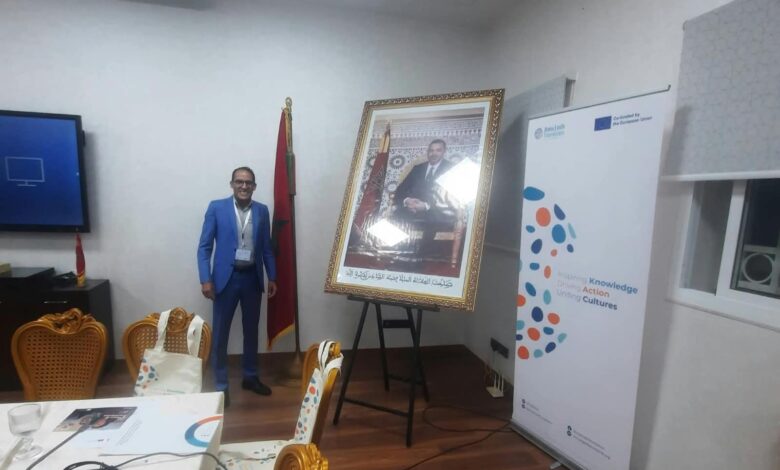
The high-level Policy Debate was held in the city of Tetouan through close cooperation between the Anna Lindh Foundation and Morocco’s Ministry of Foreign Affairs, African Cooperation and Moroccan Expatriates, with the support of Tetouan Municipality. The event formed part of the celebrations marking Tetouan’s designation as the Mediterranean Capital of Culture and Dialogue for 2026.
The forum brought together religious leaders, academics, practitioners and policymakers. Over two days, participants worked to develop conceptual and practical solutions to shared challenges, in line with the principles of co-ownership, co-creation and shared responsibility, in the service of the Euro-Mediterranean region.
The forum’s concept note emphasised that hosting the initiative in Tetouan provides a strong and symbolic environment for meaningful dialogue. The event also forms part of the celebrations recognising the city, known as the White Dove, as a Mediterranean capital of culture and dialogue in 2026, and as a laboratory for intercultural development.
The concept note further highlighted that Tetouan’s heritage and contemporary identity embody a living dialogue between Andalusian, Amazigh, Arab, Jewish and Mediterranean identities. They also reflect the potential of intercultural and interreligious dialogue to bridge divisions between communities and contribute to building a shared future.