The Moroccan Sahara Issue: After 35 Years of MINURSO, Morocco Opens the Way Towards Ending the Artificial Dispute
ALDAR / Iman Alaoui
The UN Security Council’s failure to renew the mandate of the United Nations Mission for the Referendum in Western Sahara (MINURSO), during its meeting held on 30 October 2026, marks a major political and historical turning point in the evolution of the Moroccan Sahara issue. It signals the beginning of a new phase in the United Nations’ approach to this regional dispute, characterised by a shift away from crisis management and the perpetuation of the status quo towards the pursuit of a lasting settlement based on political realism and respect for the sovereignty and territorial integrity of the Kingdom of Morocco.
The developments within the Security Council cannot be reduced to a mere technical setback in the renewal of the mandate of a UN mission. They carry profound political implications, given their connection to a process that has lasted 35 years, during which MINURSO maintained its presence in the Kingdom’s southern provinces, within an international and regional context whose defining parameters have since undergone significant changes. Consequently, the non-renewal of its mandate opens the door to closing an entire chapter of UN engagement, with all the milestones, developments and challenges that accompanied it.
This milestone takes on additional significance as it coincides with Morocco’s celebration of the “Unity Day”, instituted by His Majesty King Mohammed VI. The occasion carries a clear political and symbolic message, affirming that the Kingdom is entering a new phase in the management of its foremost national cause. This phase is based on moving beyond traditional approaches and embracing a profound transformation of the political and diplomatic parameters that have shaped this dispute for decades.
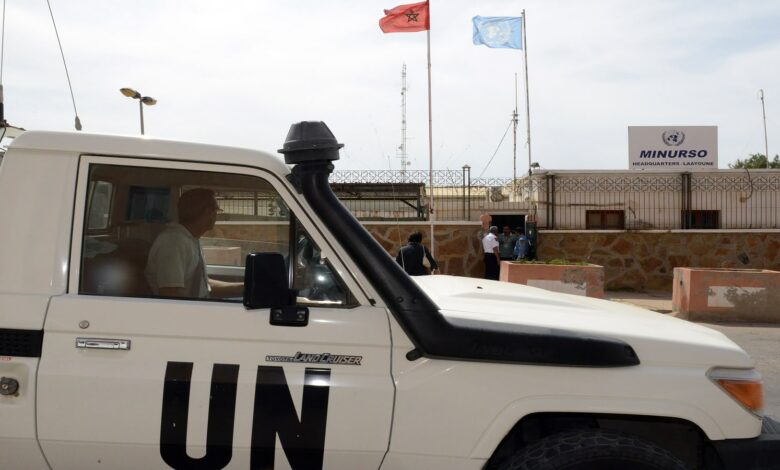
From this perspective, and in accordance with Morocco’s officially stated position, the non-renewal of MINURSO’s mandate means that the Mission’s continued presence in the Kingdom’s southern provinces, including its personnel, vehicles, equipment and insignia, should come to an end in the coming days. This would translate into the practical closure of a chapter spanning 35 years, one that has become associated with a historical context overtaken by the regional and international transformations surrounding the Moroccan Sahara issue.
Since its establishment, MINURSO has represented one of the main instruments of the United Nations’ presence in this dispute, which is rooted in the Kingdom of Morocco’s legitimate recovery of its Saharan provinces. However, the continuation of this framework over several decades has failed to deliver the anticipated settlement. This has been compounded by the intransigence of the other parties and their continued reliance on prolonging the dispute, keeping the region trapped in a deadlock rather than engaging seriously in the pursuit of a realistic and definitive political solution.
The implications of this development, however, extend far beyond the future of the UN Mission itself. They also concern the institutional framework through which the issue as a whole is addressed. According to Morocco’s position, the non-renewal of MINURSO’s mandate should lead to the removal of the Moroccan Sahara issue from the UN Security Council’s agenda. This would entail ending the regular periodic meetings devoted to the matter, discontinuing the reports submitted by the UN Secretary-General on the issue, as well as the briefings delivered by his Personal Envoy.
The current UN political process, which has been characterised by years of delays and a lack of progress due to the positions of the other parties and their insistence on perpetuating the stalemate and maintaining the status quo, would therefore face a new phase requiring a reassessment of the mechanisms used to address the dispute. This approach would not be limited to the Security Council. Similar steps are expected to be taken in the near future within other United Nations bodies, with a view to ending the repeated circulation of the issue across international institutions.
At the same time, Morocco’s satisfaction with this development should in no way be interpreted as a departure from its fundamental commitment to peace and stability. The Kingdom reiterates its firm commitment to the ceasefire, while insisting on full respect for the integrity and unity of its territory, the protection of its national security and the safety and peace of mind of its citizens. These principles remain central to all Moroccan positions and diplomatic initiatives.
More importantly, the institutional transformation surrounding MINURSO’s future cannot be separated from the international diplomatic momentum initiated by His Majesty King Mohammed VI. This momentum will continue at both bilateral and regional levels, following the consolidation of significant political gains and the shift in an increasing number of countries’ positions from general support to clear and explicit endorsement of Morocco’s Autonomy Initiative under Moroccan sovereignty.
Developments associated with this diplomatic momentum reveal a growing international support base for Morocco’s proposal. More than two-thirds of United Nations Member States, including permanent members of the Security Council and influential international powers, now clearly support the Autonomy Initiative within the framework of Moroccan sovereignty, regarding it as the sole framework for resolving this regional dispute.
This shift in the balance of international positions reflects the impact of the Royal approach, based on calm and effective diplomacy and on presenting the Autonomy Initiative as a realistic and credible political solution capable of ensuring stability and development while safeguarding rights and sovereignty. This approach stands in contrast to outdated positions which, over several decades, have done little more than prolong the dispute and obstruct opportunities for regional integration and cooperation.
It has become increasingly clear that the Moroccan Sahara issue is entering a phase fundamentally different from those that preceded it. This is due not only to the developments within the Security Council, but also to profound changes in the positions of the international community and the growing conviction that a settlement cannot be achieved outside the framework of Moroccan sovereignty and the Autonomy Initiative.
The closure of the 35-year chapter of MINURSO, in accordance with the vision expressed by the Kingdom, places the region before a new political and historical milestone. Its central objective is to move beyond the logic of an open-ended dispute and consolidate the foundations for a definitive settlement, in a manner that serves Morocco’s stability and territorial integrity while opening up broader prospects for development and regional cooperation.
Today, therefore, the challenge is no longer simply to manage an issue that has remained on the United Nations agenda for decades. It is to move towards a new phase of political and diplomatic resolution, against the backdrop of an international environment increasingly supportive of autonomy under Moroccan sovereignty, which the Kingdom considers the sole basis for settling this regional dispute.