Temperatures rise again in September.. Has the timing of the seasons changed in Morocco?
ALDAR/
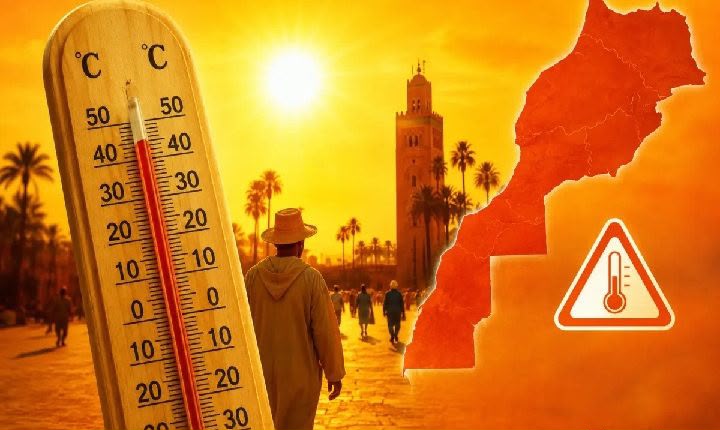
As high temperatures continue to be recorded during September, the persistence of hot weather after the end of summer raises many questions about the extent to which this is linked to climate change and whether it indicates a shift in the timing of the transition between seasons in Morocco.
In this context, El Houcine Youabed, head of communications at Morocco’s General Directorate of Meteorology, told “ALDAR” that “September is a transitional month in Morocco, and the end of summer from a climatological perspective at the end of August does not mean that summer influences stop immediately. Hot desert air masses may continue to affect the Kingdom, alongside the beginning of the intrusion of cooler air and the emergence of weather disturbances. Therefore, the occurrence of hot periods during September is not unusual in itself.”
He added that “it is necessary to distinguish between rising temperatures during this period and their exceptional intensity. The temperatures recorded on September 3, 2026, reaching 47.1 degrees in Sidi Slimane, 45.1 degrees in Kenitra, and 44.3 degrees in Salé, set new records for the month of September at these stations, highlighting the exceptional nature of this hot spell.”
Regarding a possible change in the timing of the seasons, Youabed explained that “there are scientific findings documenting changes in their duration and start dates when they are defined on the basis of temperatures. A study published in 2021 in the journal “Geophysical Research Letters” showed that the average duration of thermal summer in the mid-latitudes of the Northern Hemisphere increased from 78 to 95 days between 1952 and 2011, with the onset of spring and summer occurring earlier and the onset of autumn and winter occurring later. The Mediterranean region emerged among the areas that experienced greater changes in their seasonal cycle. The study’s projections, under a high-emissions scenario, also indicate that thermal summer could approach half of the year by 2100.”
He continued by explaining that “thermal summer refers to the period defined according to temperatures, and not to a change in the astronomical dates of the seasons. These figures also represent the average for the area studied and do not constitute values specific to Morocco.”
Youabed concluded his explanation by stating that “the persistence of heat in September may combine the usual weather fluctuations with the influence of a warmer climate that favors the extension of hot conditions. Studies support the possibility of changes in the duration of thermal seasons, but a single event cannot be used to claim that heatwaves have shifted from July and August to September and October, or that the date marking the beginning of autumn has changed consistently across all regions of Morocco.”