China through Bouchiba’s eyes: 5 principles for Moroccan students
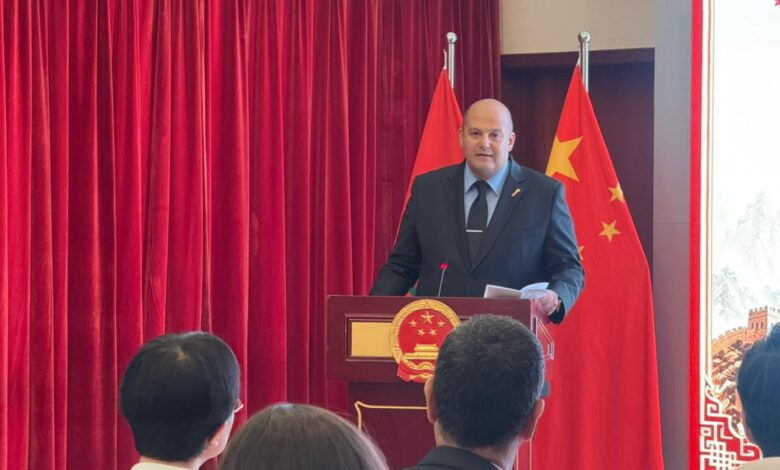
ALDAR/ Keltoum Idboufrad
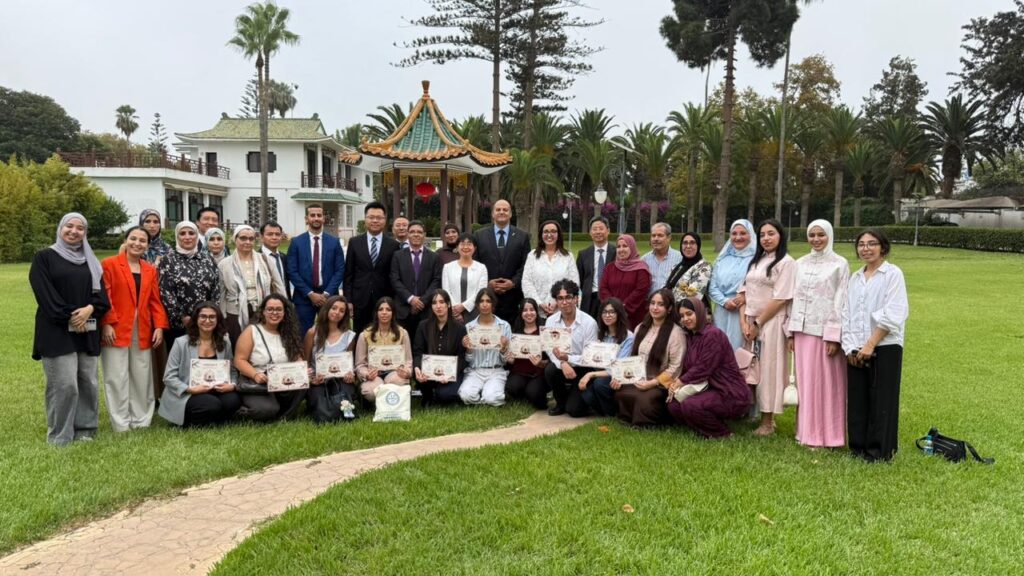
As part of a ceremony organized by the Chinese Embassy in Rabat on Thursday, September 3, to mark the awarding of the “Ambassador’s Scholarship” to a number of Moroccan students pursuing their university studies at Chinese universities, in the presence of Ambassador Yu Jinsong and several prominent figures in higher education and Moroccan-Chinese diplomatic relations, the initiative is seen as contributing to the strengthening of bilateral ties between the two countries.
In an address delivered during the ceremony, Dr. Nasser Bouchiba stressed that students benefiting from the scholarship should adhere to five principles in order to make the most of their university experience in China.
Bouchiba pointed out that learning the Chinese language is of great importance, not only through mastering the language itself, but also by becoming familiar with the symbols and elements associated with the language-learning process. This, he explained, would enable students to better understand the fundamental principles of the country in which they are studying and to discover its culture in its various dimensions.
Regarding the second principle, Bouchiba stressed the importance of strengthening students’ relationships with their Chinese counterparts, rather than limiting their interactions to foreign students. He highlighted that the gateway to discovering the real China lies in building strong friendships with Chinese peers, helping students gain a deeper understanding of Chinese society and culture. He emphasized that every Chinese friend can, in a sense, become a teacher for them.
Nasser Bouchiba also shared his personal experience as a university professor in the People’s Republic of China, both on university campuses and within a central prison, where he previously taught inmates. Drawing on this accumulated experience, he explained to the students that the third principle is based on the idea that China seeks to serve its people, while people, in return, are expected to respect the rules and laws.
In this regard, he stressed the importance of complying with applicable regulations, whether the internal rules governing institutions or general laws, noting that China is strict and serious in enforcing its laws and penalties. Moroccan students, he said, should therefore demonstrate responsibility and discipline.
The fourth principle, according to Bouchiba, is that students should not limit themselves to attending classes at university, but should also take part in various university activities, actively engage in volunteer and youth initiatives, and make an effort to go into the field and serve the community through the different opportunities available to them. Such involvement, he noted, plays an important role in developing students’ skills and communication abilities.
Bouchiba concluded his speech by revealing the fifth principle: scholarship recipients are expected to be worthy ambassadors of the Kingdom of Morocco in the friendly country of China, as representatives of their homeland. They should strive to demonstrate sophistication, excellence and a strong sense of responsibility through their actions and conduct, thereby presenting a positive image of their country and strengthening bridges of communication between the Moroccan and Chinese peoples.