A Strategic Partnership of Significant Weight: Why the Gulf Remains a Steadfast Supporter of Morocco’s Sovereignty Over the Sahara
Aldar / Sara El Wekili
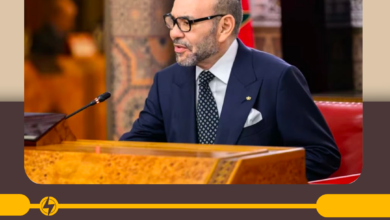
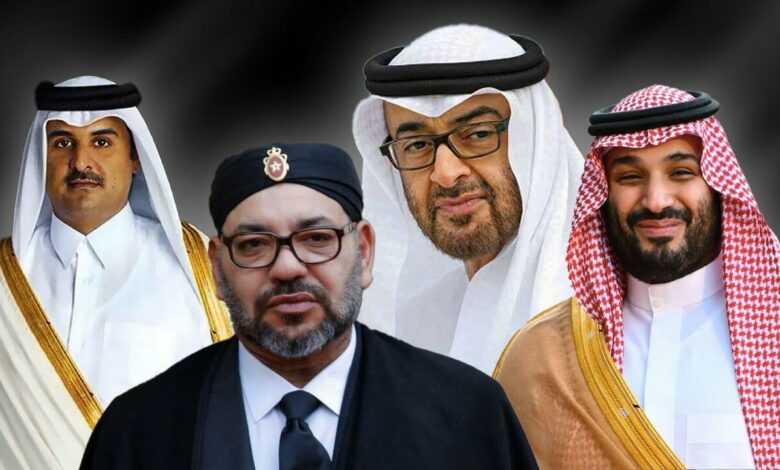
The Moroccan-Gulf partnership continues to advance with steady momentum, preserving its distinctiveness and confirming its status as one of the Arab world’s most coherent and strategically aligned political relationships. Over the decades, the ties between the two sides have not been limited to a mere exchange of interests or situational coordination; they are rooted in mutual trust, a shared strategic vision, and firmly aligned positions—reflections of the deep bonds linking His Majesty King Mohammed VI, may God assist him, with the leaders of the Gulf Cooperation Council (GCC) states.
Since the GCC Supreme Council’s invitation on May 11, 2011, for Morocco to join the Gulf bloc, it became evident that the Kingdom’s place within this Arab space was far from temporary. That invitation signaled explicit recognition of Morocco’s pivotal role in reinforcing regional security and stability, and underscored Rabat’s reputation as a reliable partner with a clear vision and influential diplomatic standing.
This trajectory is not the product of circumstance but the result of a historical accumulation strengthened by the Royal Speech delivered at the Morocco–Gulf Summit in Riyadh on April 20, 2016. In that address, the King emphasized that the maturity of this relationship called for modernizing coordination mechanisms and elevating the partnership to its full strategic scope. From that moment, it became clear that both parties were moving toward a deeper, more comprehensive relationship based on commitment, effectiveness, and alignment in addressing shared challenges.
The Riyadh Summit itself marked a significant turning point. It produced a unified Gulf stance affirming that the Moroccan Sahara issue is not merely a Moroccan concern but a cause supported by all GCC states. Gulf leaders renewed their explicit support for Morocco’s territorial integrity and endorsed the Moroccan Autonomy Initiative as the serious, credible, and realistic solution to end this manufactured conflict. They also firmly rejected any attempt to undermine Morocco’s security or stability.
This unified position carried a clear message: Morocco’s security is inseparable from that of the Gulf, and the convergence of their visions is not a simple political rapprochement but a foundation for building a long-term strategic and defensive alliance.
This approach continued visibly during the 45th Gulf Summit held in Kuwait on December 1, 2024. The final communiqué reaffirmed the strength of the partnership with Morocco, the importance of activating the joint action plan, and the GCC’s full support for the Moroccan Sahara. It also rejected any attempt to destabilize the Kingdom and welcomed UN Security Council Resolution 2756, adopted on October 31, 2024, viewing it as a diplomatic success that further strengthened international recognition of Morocco’s initiative as the only realistic, practical, and definitive solution to the conflict.
Taken together, these developments demonstrate that Moroccan-Gulf relations are far more than a temporary cooperation framework. They are part of a broader strategic vision that continues to evolve in response to shared interests and a clear assessment of regional dynamics. At the heart of this vision lies the Gulf’s unwavering support for Morocco’s sovereignty over the Sahara—an emblematic reflection of the depth of this alliance, built on sovereignty, stability, and a shared Arab destiny.