Sierra Leone Praises Royal Initiatives to Strengthen African Integration and Highlights the Strategic Importance of the Atlantic African Gas Pipeline
ALDAR /
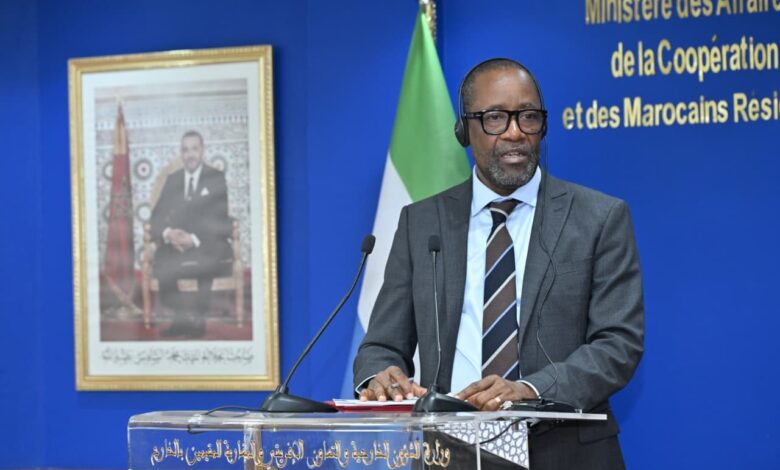
Sierra Leone’s Minister of Foreign Affairs and International Cooperation, Mohamed Rahman Swaray, has praised the strategic initiatives launched by His Majesty King Mohammed VI to strengthen African cooperation and consolidate the foundations of economic integration and regional complementarity. He also underscored the importance of Morocco’s vision in advancing major development projects capable of addressing the economic and geopolitical challenges facing the African continent.
The remarks were made during talks held on Tuesday in Rabat between the Sierra Leonean official and Morocco’s Minister of Foreign Affairs, African Cooperation and Moroccan Expatriates, Nasser Bourita. The meeting provided an opportunity to review several Royal initiatives and strategic projects aimed at strengthening connectivity between African countries and expanding prospects for South-South cooperation.
In this regard, Sierra Leone’s top diplomat commended the Initiative of Atlantic African States, as well as the Royal Initiative to facilitate Sahel countries’ access to the Atlantic Ocean. He stressed that both initiatives carry strategic dimensions extending beyond traditional cooperation, given the opportunities they offer to strengthen regional integration, develop connectivity infrastructure and promote sustainable development.
Swaray emphasized that this vision is based on the principles of stability, shared prosperity and effective African solidarity, enabling the countries concerned to overcome geographical and economic constraints while opening up new prospects for trade, investment and cooperation between different regions of the continent.
The Atlantic African Gas Pipeline project also featured prominently in the discussions. Sierra Leone’s Foreign Minister highlighted the strategic importance of this major project and the role it could play in strengthening regional economic integration, in addition to the economic and developmental benefits it could generate for participating countries, including the Republic of Sierra Leone.
The project is particularly significant in light of its potential contribution to strengthening energy security, developing regional infrastructure and expanding investment opportunities. It also offers African countries new opportunities to harness their natural resources and transform them into drivers of industrial and economic development.
In the same context, the two ministers welcomed the signing of the intergovernmental agreement relating to the project, which took place in July 2026 during the ordinary session of the Conference of Heads of State and Government of the Economic Community of West African States (ECOWAS), hosted by Sierra Leone’s capital, Freetown.
Both sides described this development as an important milestone in advancing the project, given its strategic role in promoting African economic development, unlocking the industrial potential of countries across the region and helping effectively reduce the energy deficit. These objectives are expected to strengthen the foundations of economic growth and enhance the region’s attractiveness to investors.
Meanwhile, the Moroccan side praised what it described as the remarkable success of Sierra Leone’s presidency of ECOWAS, highlighting the positive achievements recorded during this period across several priority issues for the regional bloc.
These achievements notably included efforts to restore constitutional order and consolidate the democratic process, strengthen regional cooperation in the security field, accelerate economic integration and enhance the institutional credibility of the Community.
The talks reflect the convergence of views between Rabat and Freetown on the importance of strengthening joint African action and moving cooperation between the continent’s countries beyond political and diplomatic coordination towards concrete strategic projects capable of transforming economic, energy and trade structures.
They also underscore the growing importance of Moroccan initiatives in discussions on the future of African integration, particularly amid challenges related to energy security, insufficient connectivity between African markets and the need to diversify trade and economic corridors.
This approach opens the way for a development model based on shared interests, solidarity and complementarity among African countries, while reinforcing the continent’s capacity to address common challenges and unlock its considerable economic potential.