Morocco Puts Spain on Notice Over Political Instrumentalisation of Bilateral Ties.. Rabat rejects being used as an electoral bargaining chip and warns against “strategic blindness”..
ALDAR/ Sara Loukili
Morocco has stepped up its message to Spain, calling on the country’s political authorities and parties to preserve the strategic nature of bilateral relations, which Rabat says must remain grounded in good-neighbourly relations, mutual respect, dialogue and cooperation.
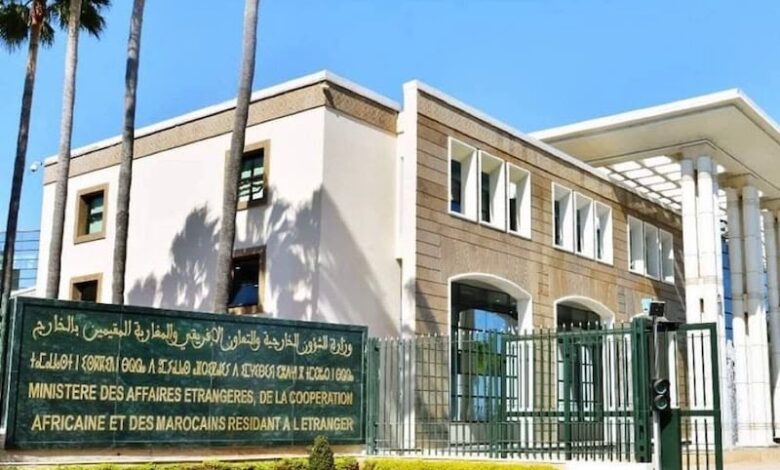
In a statement issued on Thursday, Morocco’s Ministry of Foreign Affairs, African Cooperation and Moroccan Expatriates recalled that the Kingdom had made a sovereign decision to build a relationship with Spain based on geographical proximity, political understanding, economic partnership and security cooperation.
For Rabat, this strategic orientation reached a turning point with the Joint Declaration of 7 April 2022, issued following the meeting between King Mohammed VI and Spanish Prime Minister Pedro Sánchez.
According to the Moroccan Foreign Ministry, the declaration opened a new chapter in relations between the two countries, founded on mutual respect and trust, permanent dialogue and a shared ambition to build a mutually beneficial partnership.
Since then, the ministry said, Rabat and Madrid have worked to strengthen what unites them while managing their differences calmly and respectfully, without attempts to impose faits accomplis.
A relationship with tangible results
Morocco argues that this approach has produced concrete results, particularly in the economic and security fields.
Spain, Rabat notes, is Morocco’s leading economic partner, while the Kingdom is Spain’s second-largest trading partner outside the European Union.
In the security field, cooperation between the two countries has helped save lives and dismantle terrorist and criminal networks. Morocco also points out that some of these operations were conducted under circumstances in which Moroccan security forces suffered human and material losses.
On migration, the Moroccan Foreign Ministry maintains that cooperation between the two countries has traditionally been coordinated and effective.
However, it says the events that took place last July require a thorough examination to establish the circumstances surrounding them, identify the various interventions involved, expose any manipulation and, above all, ensure that such incidents are not repeated.
Rabat puts questions to Madrid
Rather than engaging in a political dispute, Morocco’s diplomacy has chosen to raise a series of direct questions that, in its view, require clear answers.
Why, Rabat asks, do accusations against Morocco continue when, according to the Moroccan authorities, no data, facts or reports have established any involvement by Moroccan authorities?
Why are irregular migrants not being returned when the Moroccan government has formally committed to readmitting them?
And, in the case of unaccompanied minors, why are they being kept away from their families despite repeated Moroccan calls for their return?
The answer to these questions, the Moroccan Foreign Ministry argues, should not be sought in Rabat but among the relevant Spanish authorities and institutions.
The message is unmistakable: Morocco rejects being held responsible for issues in the absence of established facts and objective evidence demonstrating its involvement.
Criticism of Spain’s domestic political debate
The statement also contains a direct criticism of certain political and media circles in Spain.
Rabat expresses concern that some continue to use Morocco as an instrument in domestic political agendas. The Moroccan Foreign Ministry considers the situation particularly troubling when it involves historic political parties with extensive experience in government, which, in its view, have allowed populist rhetoric and political confrontation to prevail over common sense.
Morocco’s diplomacy also voices concern over what it describes as misguided initiatives by respected legislative and judicial institutions.
Such moves, it warns, could fuel misunderstandings and deepen differences between the two countries rather than contribute to resolving them.
According to Rabat, certain developments have allowed simplification to replace strategic thinking and accusation to replace objective analysis.
The ministry warns that this dynamic risks reinforcing what it calls a “strategy of fear”, a strategy it says ultimately harms all sides.
“Morocco will not be an electoral bargaining chip”
One of the strongest messages in the Moroccan statement is Rabat’s explicit rejection of being used as an instrument in Spain’s domestic political battles.
The Kingdom, the ministry says, will not accept becoming an “electoral bargaining chip”, a target of political manoeuvring ahead of elections, or a “scapegoat” for internal political disputes and score-settling.
For Rabat, relations with Morocco cannot be reduced to the electoral cycle or subjected to the short-term demands of domestic politics.
Geography cannot change — politics can
The Moroccan Foreign Ministry stresses that there is one reality no government can alter: the geographical proximity between Morocco and Spain.
But that proximity, it argues, can become a source of strength and cooperation if political leaders demonstrate the courage, strategic vision and determination required to manage differences constructively.
Conversely, Rabat warns that “strategic blindness” could turn this accumulated geographical, economic and political capital into a permanent source of mistrust and recurring tensions.
The Moroccan message therefore combines continuity with a clear warning.
Continuity, because Rabat remains committed to its strategic partnership with Madrid, good-neighbourly relations, cooperation and dialogue.
And a warning, because these foundations cannot be sustained if Morocco is turned into an instrument of domestic political confrontation or held responsible for issues without factual evidence supporting such claims.
For Moroccan diplomacy, preserving the gains achieved since April 2022 requires mutual respect, trust, dialogue and, above all, a policy grounded in facts rather than accusations or political manoeuvring.
The geography between the two countries is immutable. What remains in the hands of political decision-makers is how they choose to use it: as a lever for cooperation, stability and shared prosperity, or as a permanent source of tension and mistrust.