Exclusive to ALDAR — China’s Ambassador: Morocco Is a Key Partner in Building a Fairer Global Governance System
ALDAR / Exclusive Interview
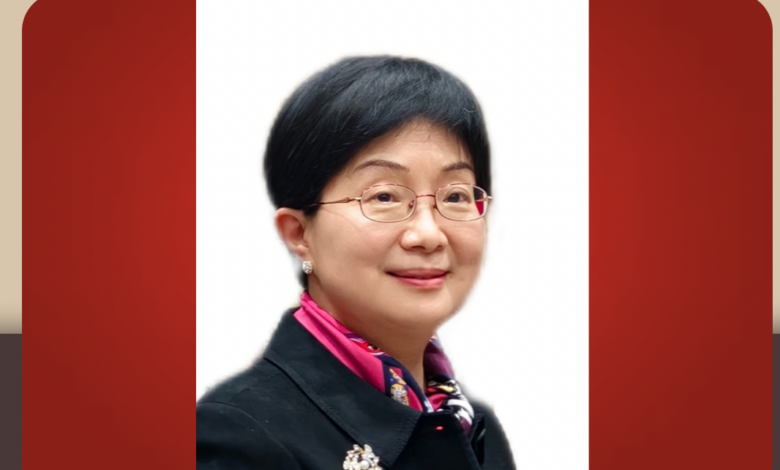
On September 8, Ambassador Yu Jinsong gave an interview to Aldar, a Moroccan French-language media outlet, on the occasion of the first anniversary of the proposal of the Global Governance Initiative (GGI). The full interview is reproduced below:
I. Aldar:
September 1, 2026 marks the first anniversary of the launch of the Global Governance Initiative (GGI) by President Xi Jinping. Could you introduce the progress and achievements made in implementing the GGI over the past year?
Ambassador Yu Jinsong: On September 1, 2025, at a pivotal moment marked by the 80th anniversary of the founding of the United Nations, President Xi Jinping solemnly proposed the Global Governance Initiative (GGI), built around five fundamental principles: sovereign equality of states, the rule of international law, multilateralism, a people-centered approach, and an action-oriented approach. Over the past year, the GGI has gradually taken root in the minds of people around the world. Moving from a Chinese proposal to international practice, the GGI has achieved fruitful results.
First, the GGI has helped build broad international consensus. It has received support and positive responses from nearly 160 countries and international organizations, while more than 60 countries have joined the Group of Friends of Global Governance, thereby generating strong momentum for reforming and improving the global governance system. It is particularly worth noting that Morocco was among the first countries to express its support for the GGI and joined the Group of Friends of Global Governance as a founding member, playing an important role in advancing and deepening the implementation of the GGI.
Second, China continues to contribute its wisdom to the reform and improvement of global governance. Over the past year, President Xi Jinping has delivered important speeches at a number of international and multilateral events, shedding light on the contemporary value and practical significance of the GGI in light of developments in the international situation and the various issues under discussion. China has successively issued the Concept Paper on the Global Governance Initiative and a white paper entitled A More Just and Equitable Global Governance, and has proposed nine priorities for advancing the reform of global governance. These proposals have received broad support from the United Nations and the international community.
Third, we have taken vigorous steps to translate the GGI into concrete outcomes. The GGI was not proposed for the purpose of engaging in fruitless discussions, but rather to encourage all countries to take action. Under China’s impetus, the International Organization for Mediation officially began operations and successfully settled its first international maritime dispute. In addition, the World Data Organization and the World Organization for Cooperation on Artificial Intelligence were successively established in China. Dozens of countries have joined them, contributing to the improvement of global governance.
II. Aldar:
You mentioned Morocco’s active support for and participation in the GGI. In your view, how can the two countries deepen cooperation within this framework?
Ambassador Yu Jinsong: Morocco is a major country in Africa and the Arab world, as well as an important member of the Global South. Morocco’s active support for and participation in the GGI demonstrate the strong consensus between China and Morocco on upholding multilateralism, promoting international equity and justice, and improving the global governance system. China welcomes this and stands ready to work with Morocco to translate this consensus into concrete cooperation outcomes.
On the one hand, China and Morocco should work together to uphold and promote genuine multilateralism, support the central role of the United Nations in international affairs, advance greater democratization of international relations, strengthen the representation of Global South countries within the global governance system, and enhance their voice in substantive international affairs. On the other hand, under the impetus of the GGI, the two countries can engage in practical cooperation within the United Nations and other multilateral institutions. This includes addressing global challenges such as climate change, food security, and the energy transition, while jointly exploring cooperation models and governance approaches suited to the realities of developing countries, so that the benefits of global governance can be shared more abundantly and equitably by the peoples of all countries.
The GGI is not a closed mechanism. As founding members of the Group of Friends of Global Governance, China and Morocco can encourage more partners to join, pool the wisdom and strength of a greater number of countries, and work together to reform and improve the global governance system. China-Morocco cooperation in itself carries positive significance that goes beyond the framework of bilateral relations.
III. Aldar:
What is the relationship between the Global Governance Initiative and the other global initiatives proposed by China? What is its significance for the future of humanity?
Ambassador Yu Jinsong: The Global Governance Initiative, together with the Global Development Initiative, the Global Security Initiative, and the Global Civilization Initiative proposed by President Xi Jinping, forms a coherent and complementary whole. Together, they constitute a major practical framework for building a community with a shared future for humanity.
The Global Development Initiative aims to address the development deficit and promote development that is more inclusive, balanced, participatory, and sustainable. The Global Security Initiative seeks to address the security deficit. It advocates a vision of common, comprehensive, cooperative, and sustainable security, with the aim of building a world of lasting peace and universal security. The Global Civilization Initiative seeks to deepen exchanges and mutual learning among civilizations. It calls for respect for the diversity of civilizations and the common values of humanity, as well as intercultural dialogue, in order to promote harmonious coexistence among different civilizations. As for the Global Governance Initiative, its mission is to address the deficit in global governance and promote the establishment of a more just and rational global governance system.
Each of the four global initiatives has its own focus, while remaining interconnected. Together, they address the important question, “What kind of world should we build, and how should we build it?” from the respective perspectives of development, security, civilizations, and governance. They form a comprehensive system in which the four initiatives reinforce and complement one another. These four initiatives are not isolated policy proposals; rather, they all contribute to a more ambitious goal: building a community with a shared future for humanity.
By launching these four global initiatives, China does not seek to pursue its own national interests alone, nor does it seek to create an exclusive group. Its ambition is to offer Chinese wisdom and solutions to the common challenges facing humanity. We are convinced that, despite differences in political systems, cultures, and levels of development among countries around the world, all peoples aspire to peace, development, and a better life. In the face of global challenges, countries are not competitors in a zero-sum game, but members of a community with a shared future. As the Global Governance Initiative is implemented, it will inject strong momentum into the building of a community with a shared future for humanity and open up broad prospects for global peace and prosperity.