Sahara: Denmark’s Support for Morocco’s Autonomy Plan Strengthens Rabat’s Diplomatic Momentum
ALDAR /
By describing Morocco’s autonomy plan as a “good basis” for a mutually agreed political solution and hailing it as “credible” and “serious,” Copenhagen is sending a significant diplomatic signal that further strengthens Morocco’s position and reinforces the centrality of its initiative in the UN-led efforts to resolve the Western Sahara dispute.
Denmark’s position in support of Morocco’s autonomy plan for Western Sahara marks a new development in the diplomatic momentum surrounding the dispute. By considering the Moroccan initiative a “good basis for a mutually agreed solution between the parties,” Copenhagen is providing additional political backing to a proposal that Rabat has long presented as the most realistic framework for achieving a lasting settlement.
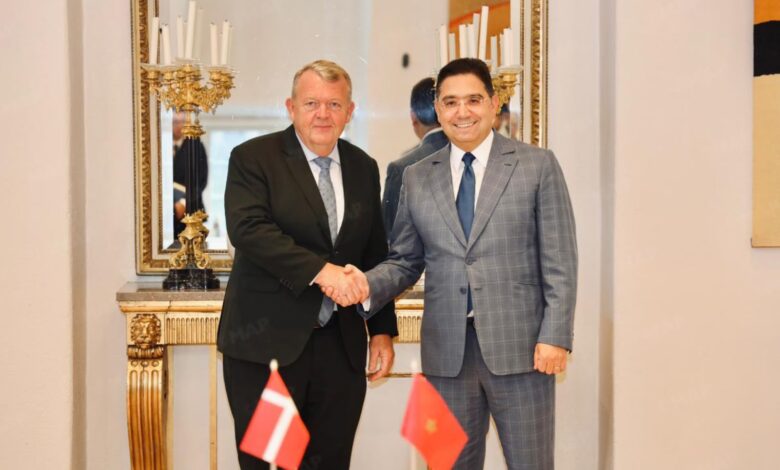
The significance of the Danish position lies first and foremost in the language used by Foreign Minister Lars Løkke Rasmussen to describe the Moroccan initiative. By calling the proposal “credible” and stating that it makes a “serious and essential contribution” to the UN-led process, Copenhagen is going beyond a general endorsement of a political solution. It is explicitly recognizing the relevance of Morocco’s initiative within international efforts to reach a settlement.
The statement came during the working visit to Copenhagen by Morocco’s Minister of Foreign Affairs, African Cooperation and Moroccans Abroad, Nasser Bourita, adding a new dimension to Morocco’s sustained diplomatic engagement over the Western Sahara issue.
An endorsement that goes beyond political support
One of the most significant aspects of Denmark’s position is its direct connection to the UN-led political process. Alongside Copenhagen’s welcome, in line with the European Union’s position, for the adoption of UN Security Council Resolution 2797, its description of Morocco’s autonomy plan as a “good basis” for a mutually agreed solution places the Moroccan initiative squarely within the international framework for a political settlement.
For Rabat, this alignment carries strategic importance. Morocco has consistently argued that autonomy under Moroccan sovereignty represents the most realistic, pragmatic and sustainable option for bringing the dispute to a definitive conclusion.
The adoption of such explicit language by a European country further strengthens the visibility of Morocco’s proposal in the international debate and reinforces its position as a serious and negotiable framework for a political settlement.
The Danish formulation is particularly significant because it brings together three concepts that are central to the international approach to the issue: credibility, seriousness and consensus. In doing so, it presents Morocco’s initiative not merely as a political proposal, but as a viable basis on which the parties could build a mutually acceptable settlement.
A significant diplomatic signal from Copenhagen
Denmark’s position also carries particular weight in light of Copenhagen’s role on the UN Security Council. Its positive assessment of the autonomy plan therefore sends a diplomatic signal that extends beyond the framework of Moroccan-Danish bilateral relations.
More broadly, it reflects growing international attention to Morocco’s initiative as a key element in discussions over the future of Western Sahara.
For Rabat, this development is particularly important. Morocco has spent years building diplomatic momentum around its autonomy initiative and seeking to establish it as the main reference point for any political settlement of the dispute.
Denmark’s position adds to that momentum and reinforces the perception of a gradual evolution in the international approach to the issue, with increasing emphasis on realistic, pragmatic and implementable solutions.
Morocco’s strategy continues to build diplomatic gains
The Danish position should also be viewed in the context of Morocco’s long-term diplomatic strategy, which has sought to establish the autonomy plan as a realistic and negotiable solution consistent with the principles underpinning the UN-led political process.
Over recent years, Morocco has intensified its diplomatic efforts to broaden international support for the initiative, arguing that autonomy under Moroccan sovereignty offers a practical framework capable of overcoming the prolonged stalemate surrounding the dispute.
Copenhagen’s position strengthens this approach. By describing the Moroccan proposal as “credible” and “serious,” Denmark reinforces Rabat’s central argument that the autonomy plan constitutes a concrete, negotiable initiative capable of paving the way toward a lasting political settlement.
The European dimension gains importance
Denmark’s reference to the European Union’s position also deserves particular attention, as it gives Copenhagen’s statement a significance that goes beyond the bilateral Moroccan-Danish relationship.
The position comes amid a broader European context in which Morocco’s autonomy plan has gained increasing attention in the approaches adopted by several European capitals toward the Western Sahara issue.
From this perspective, Denmark’s position can be seen as another indicator of a growing European preference for an approach based on realism, pragmatism and the search for a mutually agreed political solution.
For Morocco, the next challenge will be to translate this diplomatic momentum into broader international support for the autonomy plan, while continuing its engagement with the UN-led political process.
A new diplomatic gain for Rabat
Ultimately, Denmark’s position represents a new diplomatic gain for Morocco—not simply because Copenhagen has expressed support for the Moroccan initiative, but because it has explicitly described it as a potential basis for a mutually agreed political settlement.
By characterizing the autonomy plan as a “good basis” and emphasizing its credibility, seriousness and contribution to the UN process, Copenhagen is providing Morocco’s initiative with additional political weight and strengthening its place in the international debate over the future of Western Sahara.
More importantly, the Danish position reflects a diplomatic approach that converges with the essence of Morocco’s strategy: a realistic, lasting and mutually agreed political solution based on the autonomy plan under Moroccan sovereignty.
Copenhagen’s statement therefore appears to be more than a passing diplomatic gesture. It represents another step in a broader international dynamic in which Morocco’s initiative is gaining increasing recognition as a serious and realistic basis for a definitive political settlement of the Western Sahara issue.