Conspiracy Thinking as a Governing Doctrine: What Is the Algerian Regime Hiding Behind Its Security Apparatus?
Conspiracy Thinking as a Governing Doctrine: What Is the Algerian Regime Hiding Behind Its Security Apparatus?
ALDAR/ Iman Alaoui
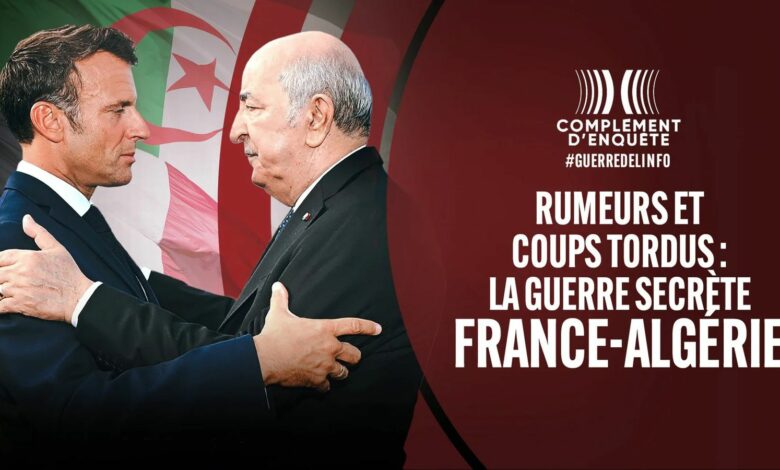
What the French television investigation has revealed is no longer mere sensational media content; it has become a political and moral indictment of a regime that has chosen to govern from the shadows, replacing the logic of the state with the logic of security services. The investigative documentary broadcast by France 2 sheds light on a reality that is now well known in Western decision-making circles: the Algerian regime no longer manages its foreign relations through diplomacy and institutions, but through interference, pressure, and blackmail—relying on its intelligence arms as a primary tool for crisis management and score-settling.
The investigation paints a bleak picture of Franco-Algerian relations, now at their lowest point since independence. This deterioration is not the result of a passing political dispute or a difference of opinion, but of systematic behavior attributed to Algerian security services which, according to the evidence and testimonies presented, seek to influence French decision-making through methods that bear no resemblance to those of a modern state. This is not about legitimate intelligence exchanges or balanced security cooperation, but about infiltration, coercion, exploitation of diaspora communities, and attempts to subdue elected officials and activists through fear and intimidation.
What makes these practices particularly dangerous is not only their hostile nature toward a sovereign state, but what they reveal about the Algerian regime itself: a system incapable of building genuine diplomatic influence, and therefore resorting to covert action; a regime that has failed to convince its own people and regional environment of its legitimacy, and thus seeks to export its internal crisis abroad. Instead of addressing deep-rooted economic, social, and political dysfunctions, it chooses to flee forward by manufacturing external confrontations, presented to domestic public opinion as “conspiracies” that justify the perpetuation of an iron-fisted security grip.
The French investigation also highlights how Algerian intelligence services have come to operate as an autonomous political actor, beyond any real accountability or oversight—an evolution consistent with Algeria’s long history of security dominance over political decision-making. For decades, the country has failed to transition toward a genuine civilian state, remaining hostage to internal power balances controlled by unelected centers of influence that view every disagreement as a threat and every critical voice as a potential enemy.
On the international stage, Algeria’s actions place it in an increasingly awkward position, particularly in a global context that has become far more sensitive to foreign interference and influence operations. France, which for years overlooked the Algerian regime’s excesses due to interests and the weight of colonial history, now faces a reality that is difficult to ignore. Silence is no longer a politically comfortable option, but a risk that directly affects its internal security and institutional integrity.
Ultimately, this investigation exposes what the Algerian regime has long sought to conceal: a state that distrusts politics, rejects balanced partnerships, and prefers to manage its relations through covert confrontation. Yet such an approach, no matter how long it persists, cannot produce a respected state or sustainable influence. Intelligence operations may temporarily unsettle adversaries, but they do not build legitimacy, they do not create stability, and they cannot compensate for the failures of a regime that survives on crises and feeds on hostility.