From Rabat to the World: King Mohammed VI Among the Global Elite of Peace Builders
From Rabat to the World: King Mohammed VI Among the Global Elite of Peace Builders
ALDAR/ Meryem Hafiani
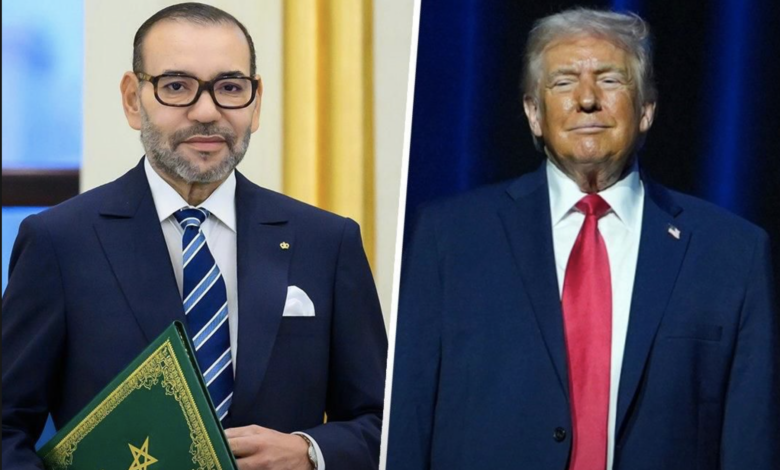
At a delicate international moment marked by overlapping crises and stalled pathways to resolution, Morocco once again emerges as a trusted and credible actor in the global peace equation. King Mohammed VI’s acceptance of an invitation to join, as a founding member, the “Peace Council” is not a routine diplomatic gesture, but a politically significant signal reflecting the stature accumulated by Moroccan diplomacy and the confidence the Moroccan monarch enjoys within international decision-making circles.
This invitation cannot be read through the lens of courtesy or short-term calculations. Rather, it fits into a long trajectory of calm, balanced engagement that has positioned Morocco as a country consulted when files grow complex and relied upon when mediation spaces narrow. When Morocco is called upon to join a global peace initiative, it is because its record has been built not on rhetoric, but on consistent positions and a rare political credibility in an unsettled world.
King Mohammed VI has succeeded in shaping a distinctive diplomatic model, one that combines principled clarity with practical flexibility. On major issues—foremost among them the Palestinian cause—Morocco’s position has remained unambiguous: support for a just and comprehensive peace leading to the establishment of an independent Palestinian state within the 1967 borders, with East Jerusalem as its capital, alongside peaceful coexistence that guarantees security and stability for all peoples of the region. This balance between commitment to principles and realistic engagement in peace efforts is what has earned Morocco growing international respect.
The King’s involvement in the Peace Council also reflects an international awareness that resolving conflicts is no longer possible through the logic of imposition or sharp polarization, but rather through leaders capable of building bridges and understanding the complexities of history and geography, without compromising sovereignty or rights. Morocco, under the leadership of King Mohammed VI, has presented itself as a model of this approach: a state independent in its decisions, clear in its vision, and committed to regional and international stability.
Most importantly, this Moroccan presence is not rooted in hard power or financial leverage, but in moral capital patiently accumulated through years of consistency between word and deed. When Morocco speaks of peace, it does so from a position of responsibility, not from a posture of tutelage or a search for the spotlight. For this reason, its inclusion in major international initiatives is an acknowledgment of its role as a “balancer” in a world that has lost much of its compass.
In an era of political noise and media polarization, Morocco continues to assert a different equation: meaningful influence does not require spectacle, and true leadership is measured by the depth of trust, not the volume of slogans. Thus, when Morocco is called upon, it is not to fill a seat, but to shift the equation—allowing the voice of peace to rise, this time, with the voice of sovereignty.