Jordanian Political Writer: “The Sahara Is Moroccan and Will Remain So”… History, Legitimacy and the Will of the People Shape the Kingdom’s Future from Tangier to Lagouira
ALDAR / Sara Loukili
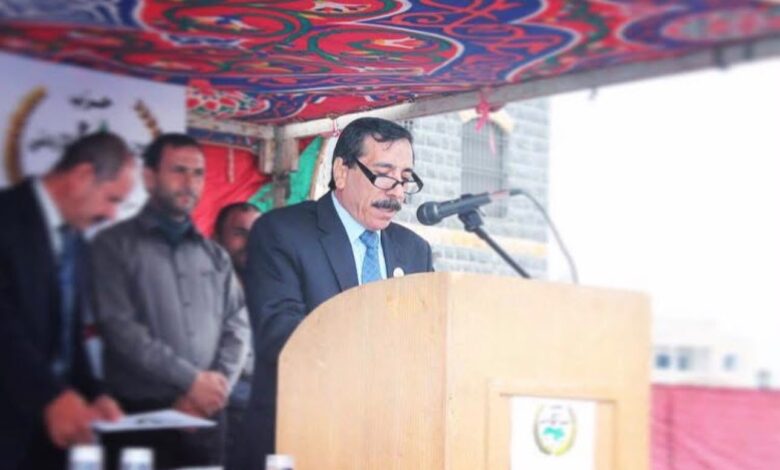
Jordanian researcher and political writer Aouni Al-Rajoub has affirmed that the Moroccan Sahara issue represents one of the Kingdom’s most fundamental national constants, stressing that the Moroccan identity of the Sahara is rooted in a deep historical legacy, longstanding political, legal and spiritual ties, broad national consensus, and the strategic vision pursued by King Mohammed VI on both the diplomatic and development fronts.
In a political article entitled “The Sahara Is Moroccan… and Will Remain Moroccan,” Al-Rajoub explained that Morocco’s position on its territorial integrity is neither the product of a particular political circumstance nor a slogan raised on specific occasions. Rather, it reflects a historical reality and an enduring national determination, passed down through generations and embodied in Moroccans’ unwavering attachment to the unity of their country, from Tangier to Lagouira.
The Jordanian writer noted that Morocco is distinguished by more than twelve centuries of historical and institutional continuity, during which successive dynasties ruled the country while the monarchy and the institution of allegiance (Bay‘a) remained among the fundamental pillars of the Moroccan state’s unity. He emphasized that the historical relationship between the Saharan provinces and the Moroccan Throne did not emerge in recent times, but dates back centuries, as demonstrated by acts of allegiance, royal decrees, the appointment of judges and local governors, the organization of commercial caravans, as well as social and spiritual ties and shared efforts to defend the homeland.
In this context, Al-Rajoub recalled the advisory opinion issued by the International Court of Justice in 1975, which examined the historical and legal ties between the Sultan of Morocco and certain tribes living in the territory of the Sahara. He considered these elements an essential part of the historical foundation upon which Morocco bases its defense of its territorial integrity.
Regarding the management of this issue, the writer highlighted the role played by King Mohammed VI, noting that the Royal approach has been characterized by political composure, strategic realism and a rejection of impulsive reactions. Instead, Morocco has pursued a gradual diplomatic strategy focused on building alliances and expanding international support, while simultaneously launching major development projects across the Southern Provinces.
He considered Morocco’s presentation of its Autonomy Initiative to the United Nations in 2007 a major turning point in the search for a political settlement to the dispute. The initiative proposes granting the populations of the Southern Provinces broad powers to manage their local affairs within the framework of Moroccan sovereignty and national unity, in accordance with the principles of democracy, advanced regionalization, and respect for rights and freedoms.
According to Al-Rajoub, the importance of the Moroccan initiative lies in its ability to reconcile the preservation of the Kingdom’s territorial integrity with the requirements of local self-governance. It therefore offers a realistic political framework for resolving a regional dispute that has persisted for decades and whose resolution has become essential to strengthening stability and cooperation across the Maghreb.
Morocco’s efforts, the writer added, have not been confined to diplomacy. They have also been accompanied by extensive development initiatives, foremost among them the New Development Model for the Southern Provinces, launched by King Mohammed VI in 2015, with the aim of achieving economic, social and structural transformation in the region and enhancing its attractiveness to domestic and foreign investors.
Al-Rajoub pointed out that the cities of Laayoune, Dakhla, Boujdour and Smara have witnessed remarkable progress in infrastructure and basic facilities over recent years, through projects involving ports, airports, roads, universities and hospitals, alongside investments in renewable energy, industry, maritime fisheries and various other economic activities.
He stressed that these projects have strengthened the position of the Southern Provinces within Morocco’s national economic fabric and opened up new prospects for their integration into their African and international surroundings. On-the-ground development, he argued, has thus become one of the fundamental pillars of Morocco’s approach to defending its territorial integrity.
As part of this broader vision, the writer highlighted the importance of the Atlantic Initiative launched by King Mohammed VI, which seeks to enable landlocked African countries, particularly those in the Sahel, to benefit from Morocco’s Atlantic coastline. The initiative aims to provide opportunities for connectivity, transportation and trade, while opening new gateways for these countries’ economies to access international markets.
He also drew attention to the African Atlantic Gas Pipeline project, which extends approximately 6,000 kilometers and involves 13 African countries. He described it as one of the major strategic projects designed to strengthen economic and energy integration between West and North Africa while connecting the African continent to international markets.
In Al-Rajoub’s view, these initiatives reflect a fundamental shift in the strategic importance of the Southern Provinces within Morocco’s broader vision. The region is no longer merely the subject of a regional dispute; it is increasingly becoming a hub for economic and geopolitical projects extending beyond the Kingdom’s borders, aimed at strengthening African cooperation and consolidating stability and development across the Sahel and the Atlantic region.
On the domestic front, the Jordanian writer emphasized that the Moroccan people’s consensus on the Sahara issue represents one of the Kingdom’s greatest sources of strength. He noted that the issue holds an exceptional place in the collective consciousness of Moroccans, transcending political and social differences as a unifying national cause directly linked to the unity of the state, its sovereignty and the integrity of its territory.
He added that the cohesion of the Moroccan people around the Throne and the homeland reflects the profound connection between citizens and the Southern Provinces. It also demonstrates that defending territorial integrity is not simply an official position adopted by state institutions, but a deeply rooted conviction shared by all segments of Moroccan society, giving the national position additional political and moral strength.
Turning to international developments, Al-Rajoub argued that the Moroccan Sahara issue is undergoing significant changes, as an increasing number of countries support the Autonomy Initiative or consider it a serious and credible basis for achieving a political solution. In his assessment, this reflects the declining appeal of traditional approaches that have failed to resolve the dispute over several decades.
The writer also examined the United Nations Security Council meeting held on October 30, during which, according to the information presented in his article, the draft resolution concerning the issue failed to pass despite receiving the support of 11 countries, while three members abstained. The competing draft, meanwhile, secured only three votes out of the Council’s 15 members.
Al-Rajoub considered these figures indicative of the extent of disagreement among Security Council members, while also reflecting the growing support for Morocco’s approach compared with positions advocating alternative options. He noted that Morocco has steadily built increasing international support for its Autonomy Initiative, which has gained a prominent place in discussions concerning the future of a political settlement.
He further stated that approximately two-thirds of United Nations member states, according to his assessment, now consider the Moroccan initiative an appropriate framework or a basis for resolving the dispute, thereby strengthening Rabat’s position in negotiations and diplomatic efforts surrounding the issue.
He also referred to the discussions held at the United Nations General Assembly on November 10 and 11, as part of the debate following the use of the veto power at the Security Council. He considered that statements made by several countries once again highlighted the extent of international support for Morocco’s position and underscored the importance of pursuing a realistic and sustainable political settlement.
In assessing what he believes Morocco has achieved during the recent period, Al-Rajoub identified three main areas of progress.
The first concerns developments surrounding the future of the United Nations Mission for the Referendum in Western Sahara (MINURSO), as well as discussions about the nature of the United Nations’ role in the next phase and the possibility of moving beyond the traditional approach based on a referendum process that has remained deadlocked due to the absence of an agreement.
In this regard, he recalled the position expressed by the Moroccan Royal Cabinet, which welcomed the non-renewal of the mission’s mandate and described it as a highly significant step towards bringing the Moroccan Sahara issue to a close within the United Nations framework. At the same time, Morocco reaffirmed its continued commitment to the ceasefire, the preservation of its territorial integrity, national security and unity, and the protection of the safety and peace of mind of its citizens.
The second area concerns strengthening the Autonomy Initiative as the central reference point and building on the political and legal momentum associated with United Nations Security Council Resolution 2797, adopted in 2025. This further reinforces the Moroccan initiative as a serious and credible basis for negotiations aimed at reaching a definitive political settlement.
The third area, according to the writer, involves continuing to capitalize on growing international support for Morocco’s position, expanding the circle of countries expressing recognition and support for the Moroccan identity of the Sahara, and strengthening political and economic partnerships that further consolidate the Kingdom’s diplomatic and negotiating position.
In conclusion, the Jordanian political researcher argued that Morocco has succeeded, through the combination of historical continuity, political leadership, measured diplomacy and major development projects, in bringing about a significant shift in the way the international community approaches the Sahara issue. He stressed that the next phase will remain closely linked to continued diplomatic engagement, the expansion of Morocco’s network of allies, and the strengthening of the economic and strategic presence of the Southern Provinces.
Al-Rajoub further emphasized that the future of the issue will also depend on Morocco’s ability to continue promoting the Autonomy Initiative and explaining its political and legal foundations, while advancing development across the Southern Provinces. This would further establish the region as a destination for investment, cooperation and greater engagement with Africa and the Atlantic world.
The Jordanian writer concluded his article by affirming that the Moroccan Sahara is a unifying national cause rooted in history, geography, and longstanding legal and human ties, and supported by broad popular consensus. He considered the unity of Moroccans around their King and their homeland a fundamental pillar in confronting regional and international challenges.
He reaffirmed that Morocco will continue moving forward with determination, drawing strength from its institutions, history, development vision and diplomatic efforts, while remaining firmly committed to its territorial integrity, from Tangier to Lagouira, with the ultimate objective of reaching a definitive political settlement that safeguards the Kingdom’s sovereignty and strengthens stability throughout the region.