Coordinated Attacks Shake Mali as Suspicions of Foreign Backing Grow, with Increasing Questions Over Algeria’s Role in Destabilization
ALDAR/ Iman Alaoui
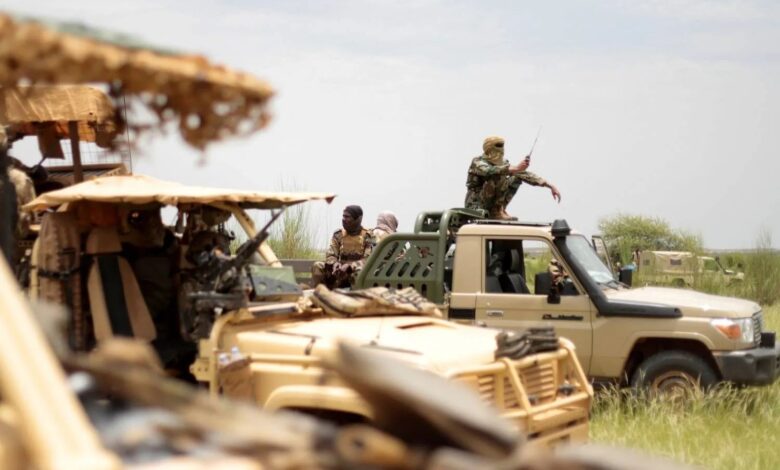
The Republic of Mali was rocked this morning by armed attacks targeting military barracks in the capital, Bamako, as well as several other regions, in a serious security escalation that highlights the country’s continued struggle against terrorist and separatist groups seeking to undermine national unity and destabilize the state.
The Malian army announced that the assaults were carried out in a coordinated manner by armed factions, noting that clashes were still ongoing in some areas. It added that security and defense forces responded swiftly to repel the attackers and restore control.
The latest violence comes amid a highly complex regional environment, where warnings continue to grow over the involvement of external actors investing in instability across the Sahel by providing political and logistical support to armed organizations in an effort to weaken central governments and obstruct any path toward peace and development.
In this context, accusations are increasingly being directed at Algeria’s military regime, which many observers of African affairs now view as one of the main beneficiaries of continued unrest in both northern and southern Mali. Analysts point to its alleged sheltering of separatist elements and the maintenance of communication channels with armed groups used as instruments of geopolitical pressure.
Observers argue that Algeria’s policy of exploiting border disputes and fueling ethnic and tribal divisions has contributed to deepening Mali’s crisis, rather than supporting political solutions capable of preserving the country’s unity and territorial integrity.
The persistence of chaos in Mali also grants the Algerian regime wider room for maneuver across the Sahel, allowing it to attempt to impose itself as a regional player despite mounting criticism over its record of backing separatist movements and harboring groups that threaten neighboring countries’ security.
The latest attacks confirm that Mali remains engaged in an open battle against terrorism. At the same time, it faces another challenge: foreign interference that exploits Malian bloodshed for narrow political calculations.
Today, the key challenge for Malian authorities lies in strengthening the domestic front and intensifying cooperation with trustworthy partners in order to uncover the sources of funding and weapons supplied to these groups, and to put an end to any regional role aimed at dividing the country and keeping the Sahel hostage to chaos.