Chinese Ambassador to Morocco Addresses a Letter to Moroccan Friends: The Facts and the Truth About the Taiwan Question
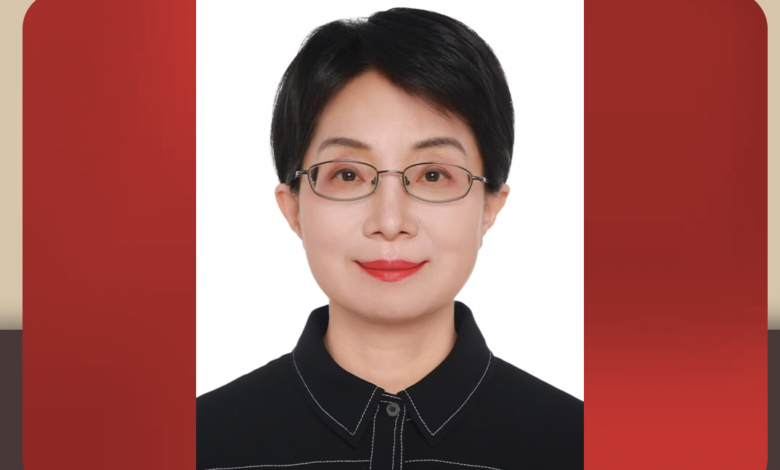
By Yu Jinsong, Ambassador of China to Morocco
Recently, the Japanese leader made absurd remarks, claiming that a “Chinese military intervention in Taiwan could pose a ‘crisis for Japan’s survival’”, implicitly suggesting that Japan might intervene militarily in the Taiwan Strait. These statements have attracted significant international attention and were reported by Moroccan media. I would like to take this opportunity to present to my Moroccan friends the One-China principle, as well as the facts and truth surrounding the Taiwan question.
First, Taiwan has always been an integral part of China since ancient times. As early as the 3rd century AD, Chinese ancestors had already reached Taiwan, leaving written traces in historical records. After the 12th century, successive Chinese governments established administrative institutions on the island, until 1894, when Japan invaded China and forced the Qing government to cede Taiwan.
The Cairo Declaration of December 1943 and the Potsdam Declaration of July 1945 clearly stipulated that all Chinese territories stolen by Japan must be restored to China, including Taiwan and the Penghu Islands. In September 1945, Japan signed the Instruments of Surrender, pledging to fully respect the obligations set out in the Potsdam Declaration.
This series of documents—bearing binding force under international law—fully demonstrates that China recovered Taiwan both legally and in practice. This forms the foundation of the post-war international order and is a key component of the One-China principle and the question of Taiwan’s sovereignty.
Second, the One-China principle is today a universal consensus within the international community. In October 1971, the 26th session of the UN General Assembly overwhelmingly adopted Resolution 2758, which clearly states that there is only one China in the world and that the government of the People’s Republic of China is the sole legitimate representative of all of China, including Taiwan.
Following the adoption of Resolution 2758, official UN documents systematically referred to Taiwan as a “province of China”. Successive UN Secretaries-General have reaffirmed that the entire UN system adheres to the One-China principle and to Resolution 2758 in all of its work.
In the 54 years since the resolution was passed, China has actively developed friendly relations with other countries, expanding diplomatic ties from over 60 states to more than 180. The One-China principle is not only the political foundation of China’s ties with other nations but also a universal global consensus and a fundamental norm governing international relations.
Third, China must be reunified—and it will inevitably be. “Peaceful reunification and One Country, Two Systems” is China’s fundamental policy for resolving the Taiwan question. Resolving this issue and achieving national reunification is the firm will and sacred mission of more than 1.4 billion Chinese people.
The recent Fourth Plenary Session of the 20th CPC Central Committee clarified the goals and tasks for promoting the peaceful development of cross-Strait relations and advancing the great cause of national reunification on the new path toward building a modern socialist country in all respects.
We remain committed to pursuing peaceful reunification with the utmost sincerity and best efforts. However, we will never renounce the option of using force, and we retain the right to take all necessary measures. No country, no force, and no individual should underestimate the firm determination, unwavering will, and strong capability of the Chinese government and people to safeguard national sovereignty and territorial integrity, and to achieve national reunification and the rejuvenation of the Chinese nation.
Fourth, Japan has no right to speak on the Taiwan issue. According to incomplete statistics, more than 600,000 Taiwanese compatriots were massacred during Japan’s occupation of Taiwan. Japan committed countless crimes against the island and bears a heavy historical responsibility.
Recently, the Japanese leader has repeatedly made provocative statements concerning Taiwan, raising the possibility of military intervention in the Taiwan Strait and even attempting to exaggerate the so-called “undetermined status of Taiwan”. Such actions not only undermine the political foundation of China-Japan relations but also openly challenge the post-war international order and the fundamental norms of international law.
Even more concerning is that Japan is deploying offensive weapons on southwestern islands near Taiwan, deliberately creating regional tensions. This trend is extremely dangerous and contradicts the strong desire for peace shared by the international community.
This year marks the 80th anniversary of the victory of the Chinese People’s War of Resistance Against Japanese Aggression and of the World Anti-Fascist War, as well as the 80th anniversary of Taiwan’s recovery. Eighty years ago, the courageous Chinese people fought valiantly and defeated Japanese militarism.
Today, 80 years later, the Chinese nation possesses an even stronger resolve, greater confidence, and sufficient capability to thwart separatist schemes aimed at “Taiwan independence” and to counter external interference.
Fifth, China and Morocco enjoy a long-standing and solid traditional friendship. Next year will mark the 10th anniversary of the establishment of their strategic partnership. Morocco has consistently adhered to the One-China principle, something that China greatly values.
The Moroccan people, like the Chinese people, cherish peace and justice. China stands ready to work with all friendly countries, including Morocco, to firmly safeguard national sovereignty, security, and development interests, resolutely oppose external interference, jointly uphold the post-war international order, and preserve global peace.