Belgium Reinforces Its Historic Position: Clear Support for Autonomy and a Broad Diplomatic–Economic Drive with Morocco
Belgium Reinforces Its Historic Position: Clear Support for Autonomy and a Broad Diplomatic–Economic Drive with Morocco
ALDAR/ Imane Alaoui
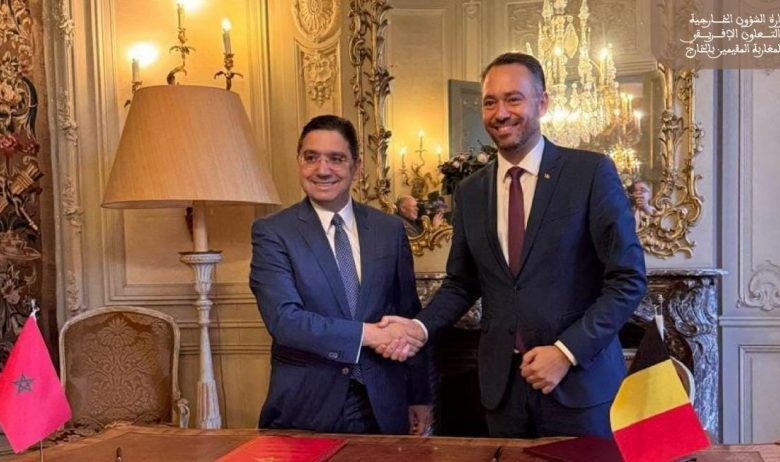
Belgium has reaffirmed its commitment to giving concrete effect to its new stance in support of Morocco’s Autonomy Initiative, as announced during the meeting held on 23 October 2025 between Nasser Bourita and his Belgian counterpart. Speaking before the Committee on Foreign Affairs in the Chamber of Representatives, Deputy Prime Minister and Minister of Foreign Affairs Maxime Prévot stressed that this commitment will translate into real action on both the diplomatic and economic fronts.
Prévot noted that this engagement will not remain at the level of statements but will be implemented through tangible measures aimed at strengthening bilateral cooperation and opening new economic prospects between the two countries. He underlined that the Consulate General of Belgium in Rabat operates without any regional distinction, and that Belgian nationals residing in Morocco’s southern provinces receive the same consular services as the rest of the Belgian community throughout the Kingdom. Consular assistance is also guaranteed for Belgians visiting the region—an explicit acknowledgment of Morocco’s territorial integrity.
The Belgian minister explained that in the coming weeks he will ensure the full implementation of the commitments arising from the political agreement signed with Morocco. He also revealed that he has instructed the Belgian ambassador in Rabat to undertake an official visit to the cities of the Moroccan Sahara to prepare economic initiatives, including visits by Belgian delegations and companies, the organization of economic forums in both Belgium and Morocco, and even the launch of an economic mission to the southern provinces with the participation of Belgium’s three regional economic agencies.
Prévot went further, announcing preparations for an expanded government visit to Morocco next spring, dedicated to operationalizing the provisions of the political agreement. He also disclosed that work is underway to organize a high-level State Visit to the Kingdom, with royal participation, as the culmination of the strong momentum that has marked Moroccan–Belgian relations during this legislative term.
The Belgian official emphasized that the political agreement signed in October represents a “pivotal step” in building a strategic partnership grounded in strong economic, human, and cultural ties. This framework, he said, will facilitate broader trade exchanges, deepen security cooperation, modernize judicial collaboration, and enhance joint efforts to combat irregular migration, organized crime, and money laundering.
Prévot reiterated Belgium’s view that the Moroccan Autonomy Plan presented in 2007 constitutes “the most credible, serious, and realistic basis” for reaching a fair, lasting, and mutually acceptable political solution, in full respect of UN Security Council resolutions. This position marks an important shift in Europe’s approach to the issue, aligning with the growing support within the continent for Morocco’s territorial integrity.
With this announcement, Brussels has moved from a traditionally balanced stance to clear, operational backing of Morocco’s vision—positioning its partnership with Rabat as a strategic model that continues to deepen and diversify, while opening wide prospects for economic cooperation and investment in one of the Kingdom’s most promising regions.