Two and a Half Centuries of Trust: How Moroccan–American Friendship Became a Geopolitical Partnership
ALDAR / Iman Alaoui
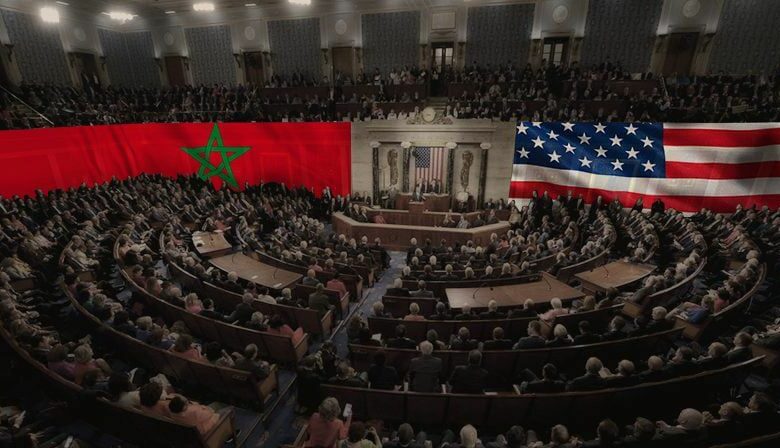
The evening hosted inside the U.S. Congress was far more than a routine ceremonial celebration. It was a politically and symbolically charged moment that brought back into focus one of the oldest friendships in the history of American diplomacy. In the Kennedy Caucus Room, more than 200 figures from the worlds of policymaking, defense, and diplomacy gathered to commemorate a partnership whose roots go back to 1777—when Morocco, ahead of its time, became the first country to recognize the independence of the United States, laying the cornerstone of an exceptional relationship that has endured through centuries of global change.
This strong presence within the halls of Congress reflects the special place Morocco now occupies in American strategic thinking. The Kingdom is not seen merely as a historical ally, but as a pivotal actor in regional stability—whether in North Africa or across the Atlantic and Mediterranean spheres. Reports and positions issued by official U.S. institutions and influential think tanks consistently affirm that Rabat is a reliable partner on issues of security, counterterrorism, maritime safety, and the promotion of dialogue between the Global North and South.
Over the past two decades, this relationship has undergone a clear qualitative shift under the strategic leadership of King Mohammed VI, who has redefined partnership with Washington on foundations that go beyond diplomatic courtesy toward a logic of mutual interests and long-term vision. During his reign, the institutional framework of cooperation was significantly strengthened, culminating in the Free Trade Agreement that made Morocco the only African country to enjoy such an advanced level of economic integration with the United States, according to data from the U.S. Department of Commerce and international economic institutions.
Yet the importance of the Moroccan–American alliance cannot be reduced to trade figures or advanced military cooperation alone. Its true weight is more evident in the political convergence on major issues. In this context, the U.S. position supporting Morocco’s sovereignty over its southern provinces stands out as a turning point in the international handling of the Sahara issue, and a clear message of deep mutual trust and aligned strategic visions. This stance—reaffirmed by successive U.S. administrations—rests on a firm conviction in Morocco’s role as a pillar of stability and a responsible partner in a turbulent regional environment.
Speaking at the event, Ambassador Youssef Amrani emphasized that the choices made by King Mohammed VI were not limited to preserving the historical legacy of the relationship, but succeeded in modernizing it and enhancing its ability to respond to the challenges of the 21st century—from food and energy security to digital transformation and climate change. These challenges, he noted, provide Washington and Rabat with common ground for coordination and joint action, as reflected in official documents issued by the foreign ministries of both countries.
Thus, nearly 250 years of shared history have become a solid foundation for an alliance that continues to renew itself—one not governed by circumstances or dictated solely by short-term interests, but framed by a strategic vision rooted in dialogue, mutual respect, and a shared commitment to peace and stability. In a world marked by growing turmoil and shifting power balances, the Moroccan–American partnership stands out as a rare model of a relationship that has successfully combined historical memory with political pragmatism, placing a shared future at the heart of its priorities.